For many aspiring ski instructors, BASI Level 2 is the qualification that turns a passion for skiing into a professional career.
While BASI Level 1 introduces the fundamentals of teaching, Level 2 is where your skiing, coaching and professionalism are taken to the next level. It's the qualification that allows many instructors to begin working independently in ski schools around the world and marks a significant step towards a long-term career in the mountains.
At Pulse Snowsports, we've helped hundreds of aspiring instructors prepare for BASI qualifications, and we've seen first-hand what separates candidates who simply attend the course from those who arrive ready to succeed. As active BASI Trainers and professional instructors, we've coached candidates through every stage of the pathway and understand exactly what the assessment demands.
BASI Level 2 is widely regarded as one of the most rewarding stages of the instructor pathway, but it's also where expectations increase considerably. You'll be assessed not only on your technical skiing but also on your teaching ability, movement analysis, professionalism and decision-making. Success comes from consistent preparation, quality coaching and a willingness to keep learning throughout the process.
In this guide, we'll explain:
Whether your goal is to spend a winter season in the Alps or build a long-term career as a professional ski instructor, this guide will give you a clear understanding of what BASI Level 2 involves and how to approach it with confidence.
Explore Our BASI Level 1 & 2 Gap Course
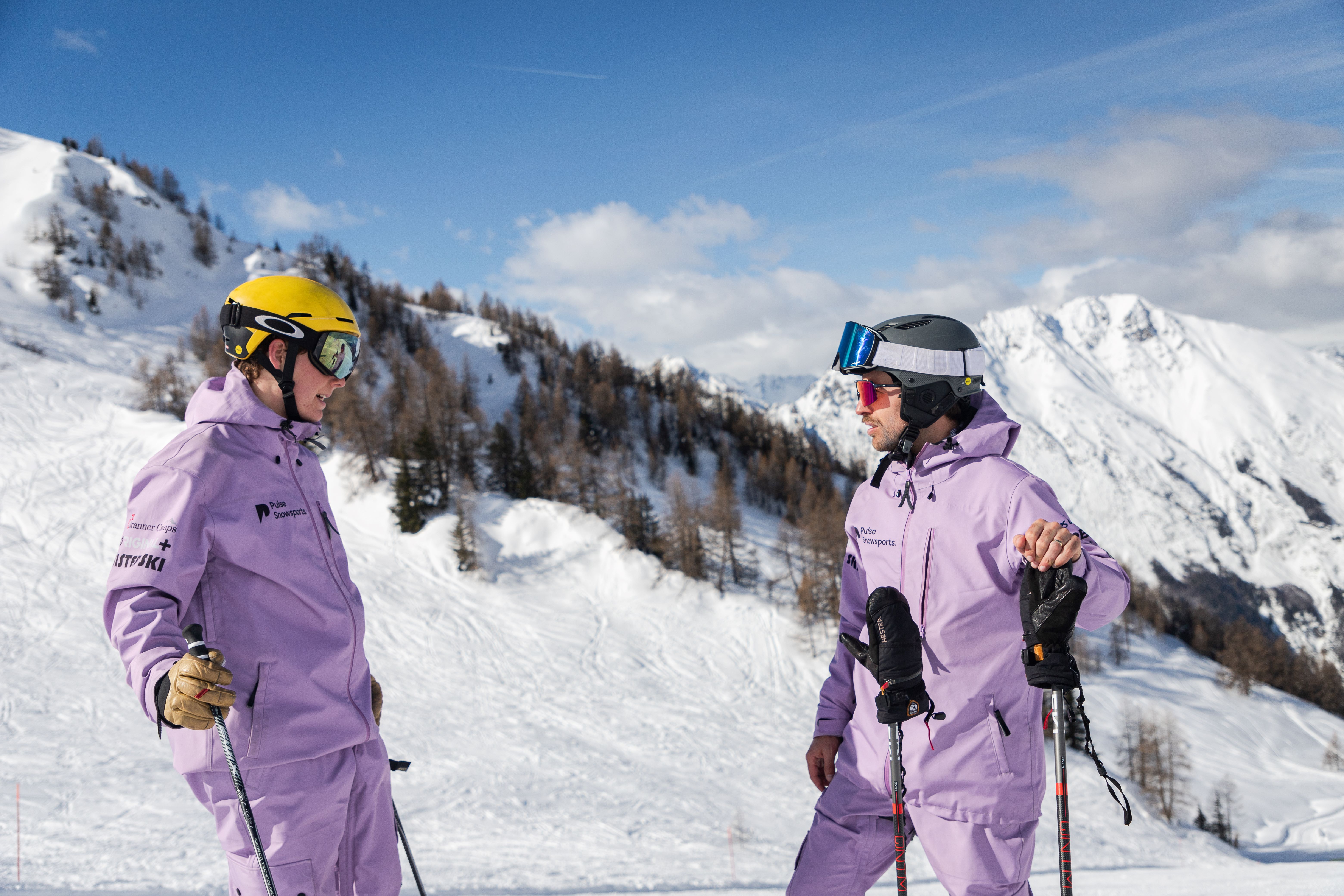
BASI Level 2 is the second qualification on the British Association of Snowsport Instructors (BASI) pathway and is widely recognised as the qualification that allows instructors to begin working professionally in ski schools around the world, subject to local regulations, work permit requirements and individual ski school policies.
While BASI Level 1 introduces the foundations of teaching, Level 2 develops those skills significantly further. The expectations are higher, the technical standard is more demanding and you'll be expected to demonstrate greater confidence, adaptability and professionalism both on and off the snow.
Successfully achieving BASI Level 2 demonstrates that you can safely and effectively teach beginner and intermediate skiers while delivering structured, enjoyable and progressive lessons. You'll continue developing your own skiing, but you'll also learn how to analyse movement, adapt your coaching to different guests and create learning experiences that genuinely help people improve.
From our perspective as ski school owners and BASI Trainers, this is the stage where candidates begin thinking like professional instructors rather than enthusiastic skiers. Great instructors don't just ski well, they communicate clearly, inspire confidence, adapt to different personalities and understand how to help every guest progress, regardless of age or ability.
For many instructors, BASI Level 2 is the qualification that opens the door to spending full seasons working in mountain resorts, gaining valuable teaching experience and building a long-term career in the snow industry.
Before enrolling on a BASI Level 2 course, you'll normally need to:
Although there is no fixed timeline between Level 1 and Level 2, most instructors spend a significant part of a season developing their skiing, gaining teaching experience and building confidence before progressing to the next qualification.
In our experience, that's time well invested.
One of the biggest mistakes candidates make is treating Level 2 as simply "the next course." In reality, it's a professional qualification with considerably higher expectations. Rushing into the assessment before your skiing and teaching are ready often creates unnecessary pressure and can make the experience far more difficult than it needs to be.
That's why we encourage every trainee to focus on long-term development rather than simply chasing the next qualification. Arriving well prepared allows you to enjoy the course, absorb feedback and perform with confidence when it matters most.
Pulse Insight: We often tell our trainees that the goal isn't to survive BASI Level 2, it's to arrive so well prepared that the assessment feels like a natural progression. Candidates who invest time in technical coaching, teaching practice and structured feedback before the course almost always gain far more from the experience
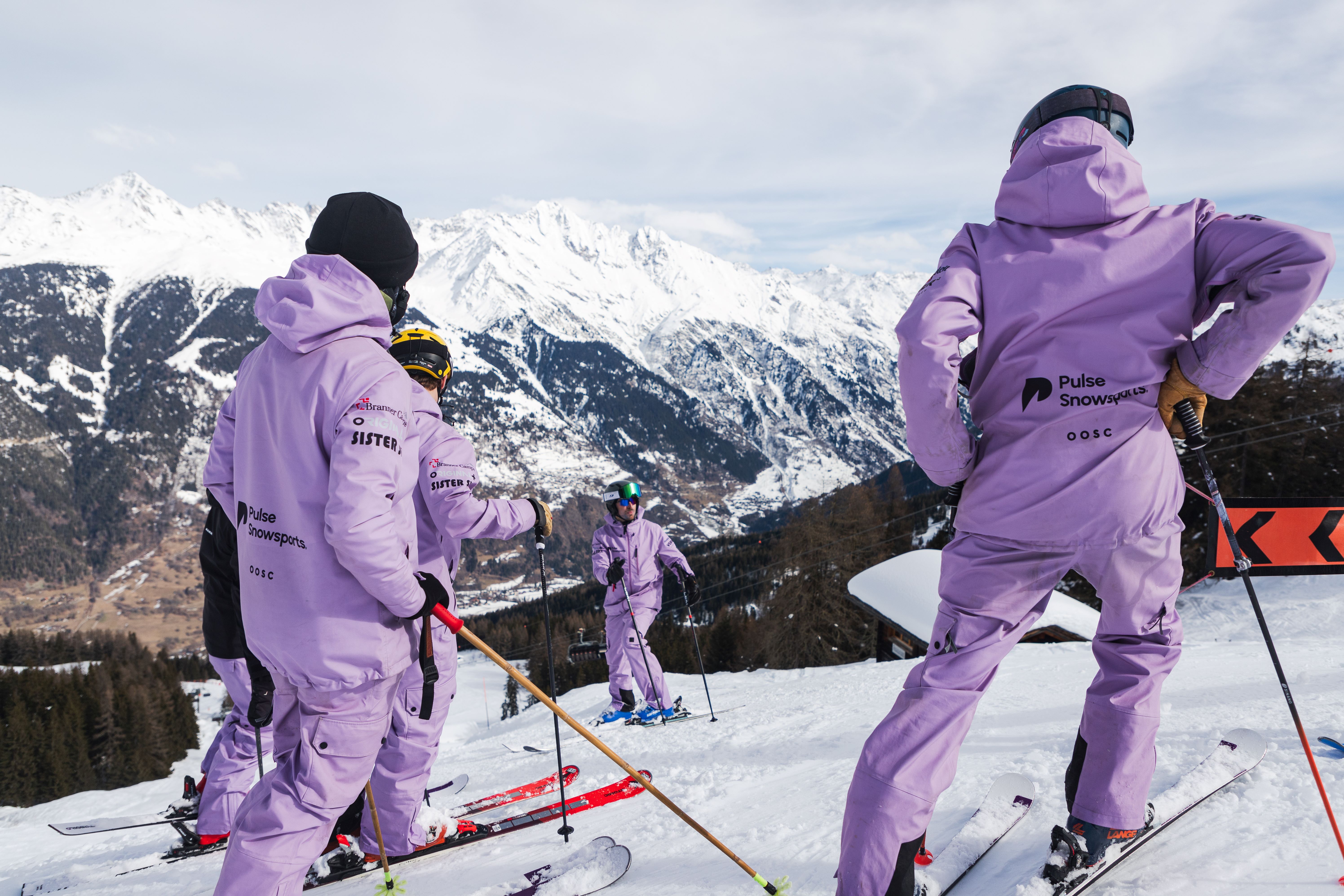
BASI Level 2 is designed to develop you into a confident, professional ski instructor capable of delivering safe, enjoyable and technically effective lessons to a wide range of guests.
The course builds significantly on the foundations established during Level 1, with higher expectations for both your skiing and your teaching. Over the eight-day assessment, you'll continue developing your technical performance while learning how to coach more independently, adapt to different learning styles and analyse skiing in greater depth.
Throughout the course, you'll work on developing:
As your technical skiing improves, so does the expectation that you can explain why a skier is struggling and adapt your coaching to help them progress. This combination of technical knowledge and teaching ability is what makes BASI Level 2 such an important professional qualification.
Pulse Insight: One of the biggest differences between Level 1 and Level 2 is that you're no longer simply delivering a lesson, you’re expected to understand why people ski the way they do and make informed coaching decisions that help them improve.
There's no point pretending BASI Level 2 is easy.
For most candidates, it's one of the biggest steps in the entire BASI qualification pathway.
While the technical skiing standard is considerably higher than Level 1, what catches most candidates out isn't usually one specific skill, it's the ability to bring everything together under assessment conditions.
You'll be expected to:
Each of these skills is challenging on its own. The real test is combining them consistently over eight days while continuing to learn, adapt and respond to feedback.
The good news is that BASI isn't looking for perfection. Assessors want to see instructors who are professional, coachable and capable of applying feedback throughout the course. Candidates who embrace the learning process often perform better than those trying to ski perfectly every run.
Pulse Insight: The strongest candidates aren't always the best skiers. They're usually the people who remain calm under pressure, communicate well, accept feedback positively and consistently demonstrate professional behaviour throughout the assessment.
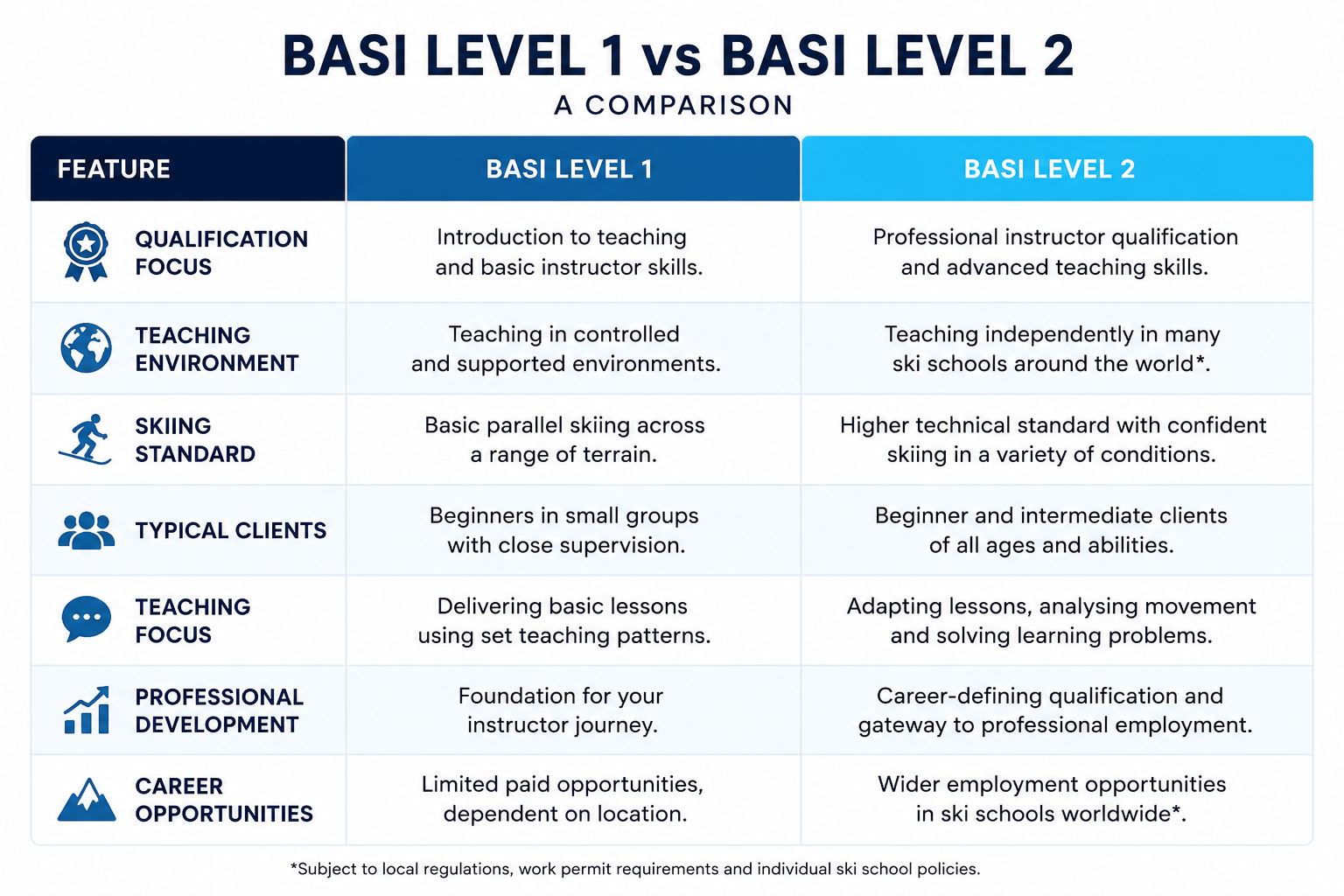
The table below highlights the key differences between BASI Level 1 and BASI Level 2, helping you understand how the expectations increase as you progress through the BASI qualification pathway.
Preparation is one of the biggest factors influencing success at BASI Level 2.
The instructors who perform best aren't necessarily the most naturally talented skiers, they're the ones who've spent time developing the exact skills BASI is looking for long before the assessment begins.
Effective preparation should include:
By making these elements part of your regular training, the assessment begins to feel less like an exam and more like another day coaching on the mountain.
That's exactly how we approach instructor development at Pulse Snowsports. Rather than preparing candidates for just eight assessment days, we focus on building confident, adaptable instructors who are ready for a career in the mountains long after the course has finished.
Pulse Insight: One of the most valuable tools we use during instructor training is video analysis. Seeing your own skiing objectively often accelerates technical improvement far more quickly than relying on feel alone, especially when combined with detailed feedback from experienced BASI Trainers.
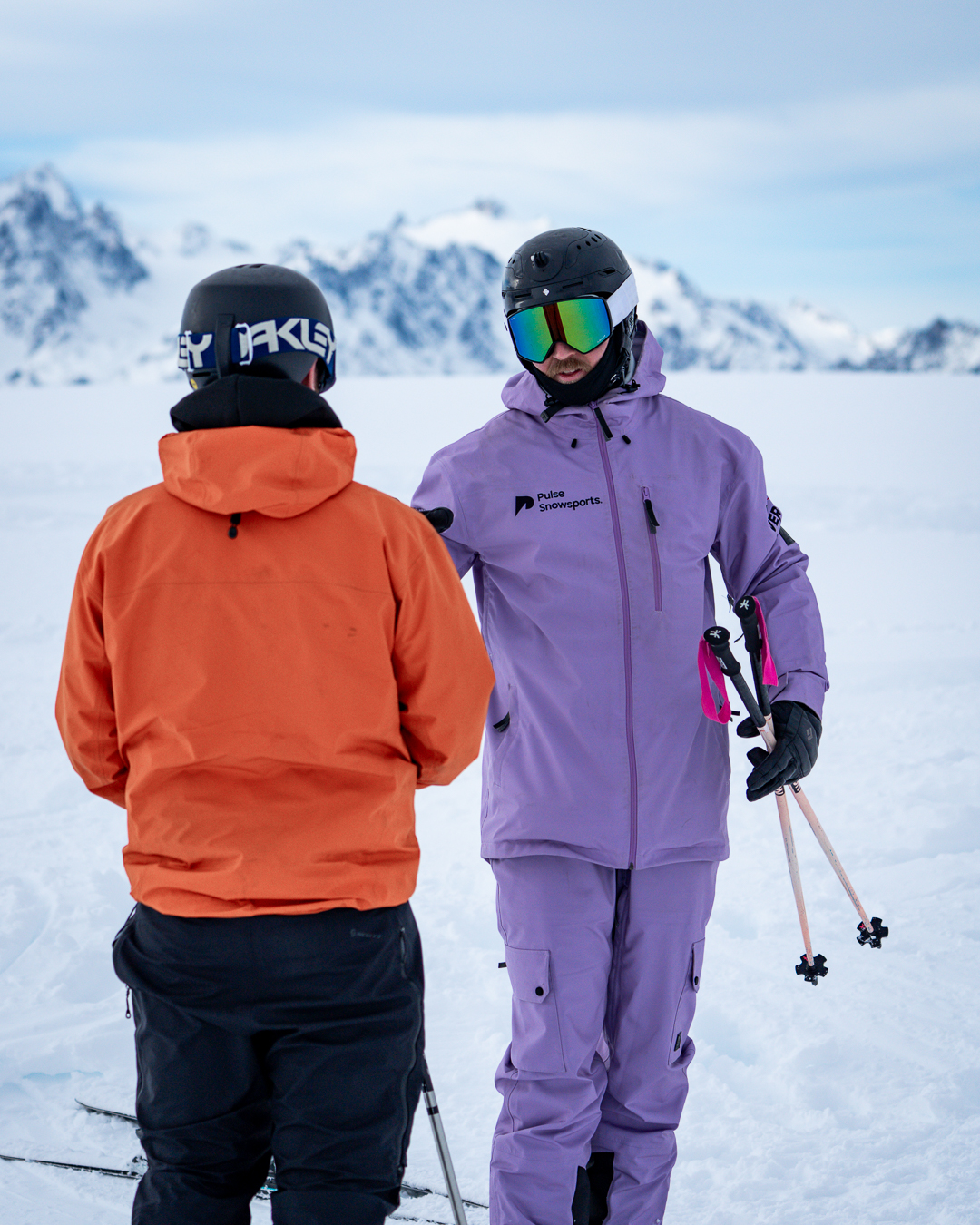
When we designed our instructor programmes at Pulse Snowsports, we wanted to create something that went far beyond preparing candidates to pass a BASI assessment.
Our goal has always been to develop confident, adaptable and highly employable ski instructors who are ready to walk into any professional ski school and thrive from day one.
That's why our BASI Level 1 & 2 Gap Course is built around months of structured coaching, progressive development and real-world teaching experience rather than relying on a short period of preparation immediately before the assessment.
Throughout the season, our trainees benefit from:
Every session is designed to build confidence, reinforce good habits and prepare candidates for the realities of working as a professional instructor, not simply passing an assessment.
By the time our trainees arrive at their BASI Level 2 course, they've already practised the exact skills they're expected to demonstrate many times over. That allows them to focus on performing with confidence rather than worrying about whether they're ready.
One of the most rewarding parts of running Pulse Snowsports is watching that transformation. Seeing someone arrive at the start of the season unsure of their ability and leave as a qualified, confident ski instructor is why we do what we do.
Pulse Insight: Passing BASI Level 2 is a fantastic achievement, but our greatest satisfaction comes from seeing former trainees build successful careers in ski schools around the world. The qualification is important, but becoming an outstanding instructor is what really matters.
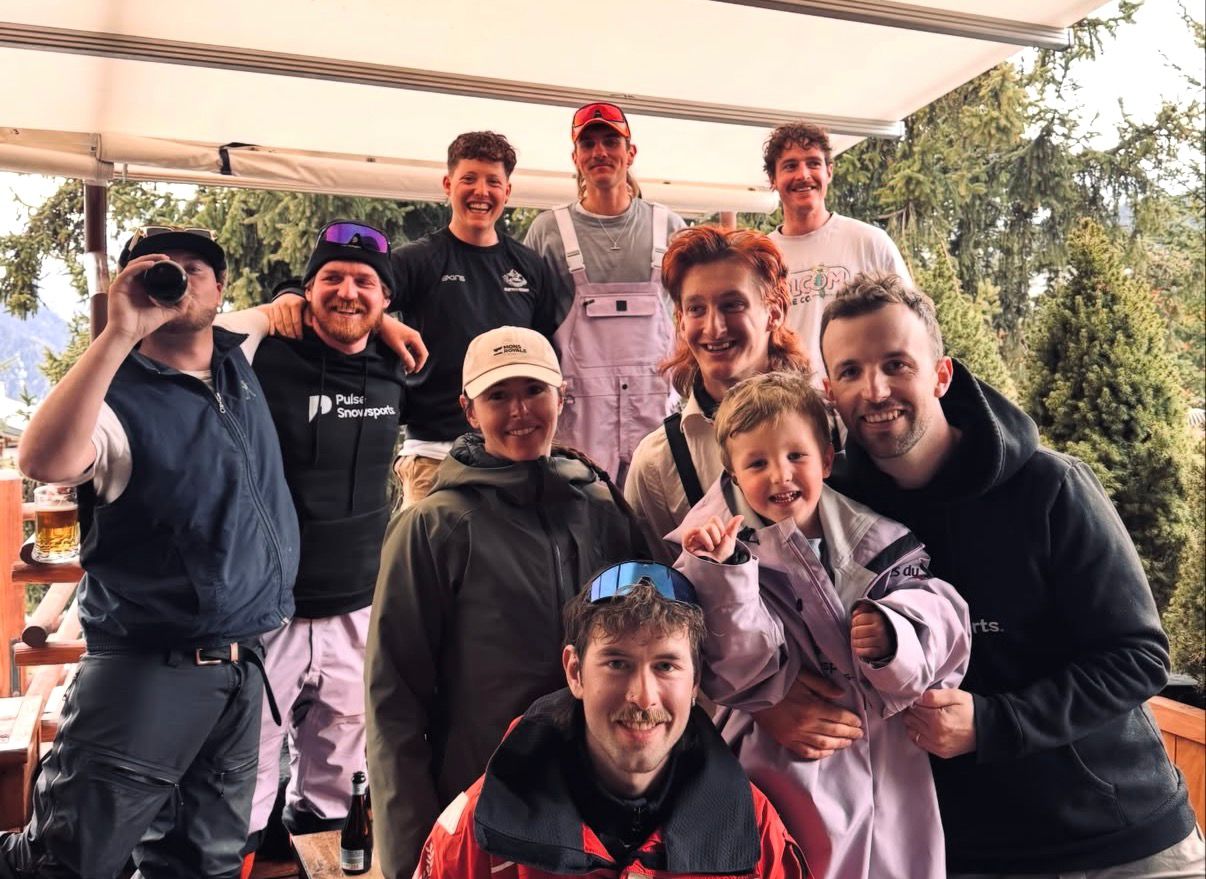
BASI Level 2 is much more than another qualification, it's the point where many aspiring instructors begin their professional careers.
It demonstrates that you have the technical skiing, teaching ability and professionalism expected of a qualified instructor and provides the foundation for working in ski schools around the world, subject to local regulations and employment requirements.
If you're serious about building a long-term career in the mountains, our biggest piece of advice is simple:
Don't just prepare to pass BASI Level 2. Prepare to become the best instructor you can be.
With the right coaching, consistent practice and a willingness to keep learning, BASI Level 2 can become the qualification that opens the door to a lifetime of opportunities in the ski industry.
Whether you're preparing for your first winter season or planning a long-term career as a professional instructor, we'd love to help you achieve your goals.
Explore Our BASI Level 1 & 2 Gap Course
Enquire About Instructor Training
Ski Instructor Courses in Verbier
For many instructors, BASI Level 2 is just the beginning. Once you've gained experience teaching professionally, the next step is working towards BASI Level 3, which leads to the internationally recognised ISIA Card and opens up even more opportunities to work around the world.
BASI Level 3 & 4 Instructor Training
Whether you're just beginning to explore becoming a ski instructor or you're already preparing for your first BASI qualification, our complete career guide explains everything you need to know, from choosing the right pathway to building a long-term career in the mountains.
→ Read our Complete Guide to Becoming a Ski Instructor
Continue exploring the BASI qualification pathway:
Explore more ski advice, resort guides, instructor training articles and mountain stories from the Pulse Snowsports team.
Book your lesson online, or speak directly with our team for help with availability, lesson options or choosing the right coaching for you.

We use cookies to improve your experience and measure website performance. You can accept cookies or continue with essential cookies only. For more information see our Privacy Policy.