👤 Written by Anthony Whitfield
BASI Level 4 ISTD • Swiss Brevet • Co-Founder of Pulse Snowsports
Anthony has spent more than a decade teaching skiing professionally across Europe, coaching everyone from complete beginners to aspiring ski instructors. He specialises in instructor development, private coaching and helping people build long-term careers in the mountains.
Read more about Anthony and the Pulse team →
✔️ Whether ski instructing is the right career for you
✔️ How the BASI qualification pathway works
✔️ How long it realistically takes to qualify
✔️ What life as a ski instructor is really like
✔️ How to build a long-term career in snowsports
✔️ Where you can work around the world
✔️ Why mentorship makes such a difference
✔️ How Pulse Snowsports develops the next generation of instructors
25-minute read
Everyone's journey into the ski industry is different. This is mine.
I first clicked into a pair of skis when I was five or six years old. Like many British families, we were lucky enough to take the occasional ski holiday somewhere in Europe, along with the odd school ski trip as I got older. Looking back, those weeks in the mountains are some of my happiest childhood memories.
I loved everything about skiing. The sense of freedom, the adventure, the time spent with friends and family, and the feeling that every single day I became a little bit better than the day before. The hardest part of every trip was always the same, it ended far too soon. There was always a flight home, a return to normal life and another long wait until the next opportunity to ski.
It never crossed my mind that skiing could become a career.
Like many people growing up in the UK, I assumed I'd finish university, find a graduate job and settle into a conventional career. It wasn't until a university ski trip that I realised people actually spent entire winters living and working in the mountains. That idea completely changed my perspective.
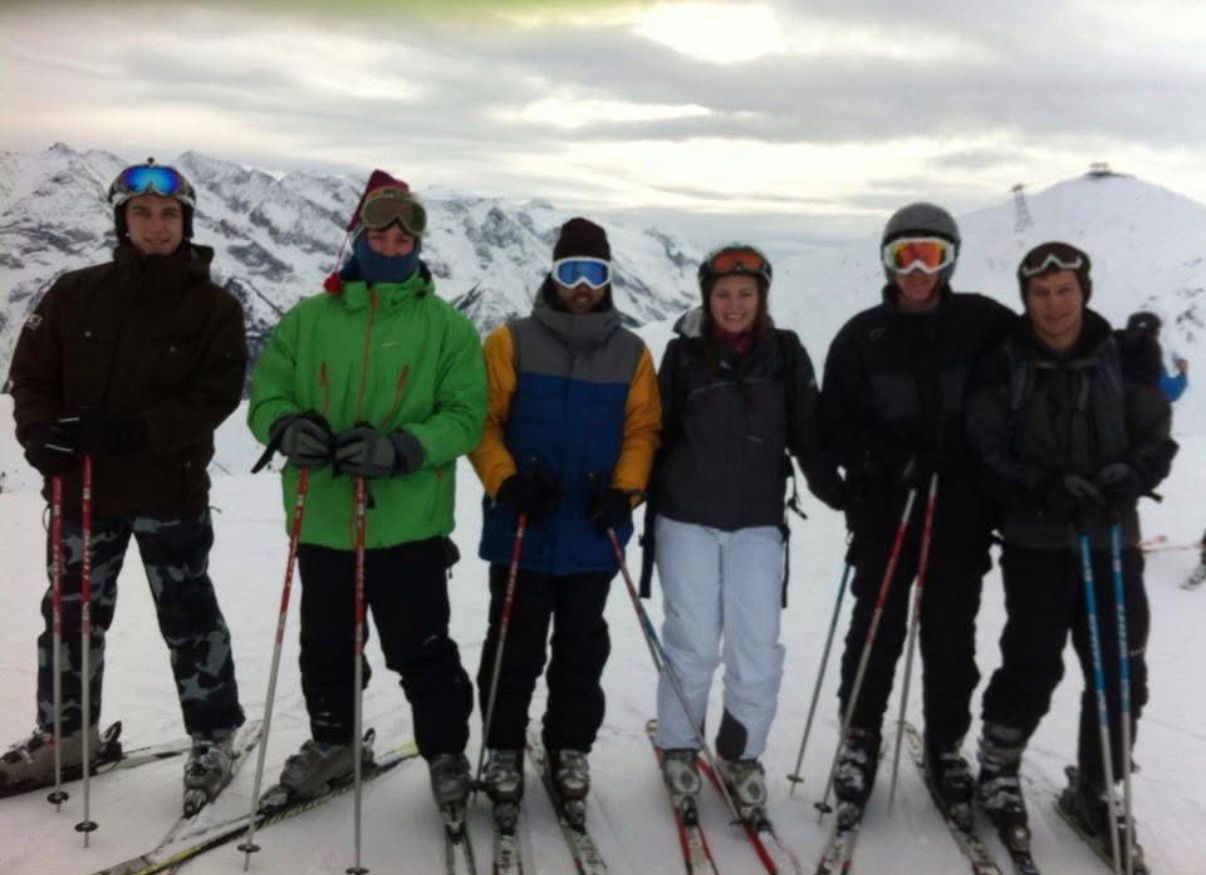
After graduating, I spent a year working in London, but the pull of the mountains never really disappeared. I decided to take one winter out before returning to city life. At the time, I didn't even consider becoming a ski instructor. I'd only skied a handful of times and, although I enjoyed teaching and working with people, I didn't believe I knew enough about skiing to teach anyone else.
Instead, I found a job at a children's holiday camp in Verbier. My role was looking after children in the afternoons after they'd spent the day skiing with professional instructors. It seemed like the perfect arrangement: I could ski during the day, work in the evenings and enjoy a season in the Alps.
I made lifelong friends, experienced a completely different way of living and spent more time skiing than I ever thought possible. By the end of the season, I'd improved enormously, but something else had changed too. I realised that the instructors I'd been watching every day weren't super heroes or former World Cup racers. They were ordinary people who had developed their skills through training, experience and a genuine passion for teaching.
I was like the instructors I’d met, someone who loved skiing, enjoyed working with people and was willing to keep learning. So for the first time, becoming a ski instructor felt achievable.
Everyone pointed me towards BASI. It had an excellent reputation, was internationally recognised and, with my limited French at the time, it was clearly the pathway that made the most sense. I quickly realised that if I wanted to work as an instructor, BASI Level 1 would be my first step.
Back in London, I booked my BASI Level 1 course at The Snow Centre in Hemel Hempstead. Every day my dad drove me there and back while I immersed myself in what felt like an entirely new world. Until then, skiing had simply been something I loved doing. Suddenly I was learning about teaching methodology, technical skiing, movement analysis, safety and professional standards.
The course was challenging, but it was also exciting. I was given the BASI manual on the first day of the assessment and began devouring it each night. Every day I understood a little more about how great instructors think, ski and teach and I could feel the progress. I hadn't completed any preparation beforehand, so there was lots of new information to absorb whilst trying to improve my own skiing at the same time. Fortunately, I'd skied a lot the previous winter so I had enough confidence on skis to make meaningful technical changes throughout the week.
The teaching sessions came more naturally and the manual was a great reference. My experience working with children meant I was already comfortable leading groups and creating a positive learning environment. What I lacked in technical knowledge, I tried to make up for with enthusiasm, openness to feedback and a willingness to improve after every session.
Not everyone on the course passed. What I learned was that the people who needed more time weren't bad skiers. They just hadn't had enough preparation. That's one of the reasons structured training and mentoring make such a difference.
Fortunately, I passed. After completing my shadowing hours, safeguarding training, online learning and first aid qualification, I officially became a BASI Level 1 instructor.
.jpeg)
I was ready to start my career.
Like many newly qualified instructors, I had very little understanding of how the industry worked. I didn't know what a Gap Course was. I didn't understand how ski schools recruited. I assumed the next step was to find an instructor position and get to work.
Finding work as a newly qualified Level 1 instructor with no experience in Switzerland wasn’t easy, ski schools preferred instructors to have at least a Level 2 qualification, so I returned to Verbier as a waiter, worked evenings and spent every spare moment skiing.
After a very different season of waiting tables and skiing, I arrived at my BASI Level 2 course towards the end of the season having prepared almost entirely on my own.
It was one of the hardest weeks of my skiing life. I realise it wasn't difficult because the qualification was impossible, it was difficult because I’d been trying to figure everything out on my own.
Unlike many candidates today, I hadn't benefited from structured training, video analysis or regular coaching throughout the season. The whole process would have been far more enjoyable, and probably far less stressful, if I'd understood the pathway from the beginning.
Thankfully, I stayed adaptable, worked hard, listened carefully to feedback and managed to meet the required standard over the eight-day assessment.
A strong performance led to recommendations. I was able to complete my shadowing hours after the assessment and secure my first job with a professional ski school in Verbier the following winter. Finally, I wasn't just spending winters in the mountains, I was beginning a career as a ski instructor. What followed was many seasons of professional development, continuous training and a wonderful career as I progressed through the rest of the system.
.jpeg)
Looking back now, I wouldn't change any of it.
The mistakes, the uncertainty and the lack of guidance taught me lessons that still shape how we coach instructors today.
That's one of the reasons we created Pulse Snowsports.
Our goal is to give aspiring instructors the guidance I wish I'd had when I started, clear advice, structured training, real teaching experience and honest mentorship from people who have lived the journey themselves.
Because becoming a great ski instructor isn't just about collecting qualifications, it's about building a career you'll still love many winters from now.
Explore BASI Level 1 & 2 Course
Explore all our Instructor Courses
Becoming a ski instructor was the single best decision I've ever made. I thought I was taking one winter out before returning to London, but that one season completely changed the direction of my life.
Today, I live in the mountains all year round, surrounded by nature, fresh air and a community of people who share the same passion for skiing, adventure and the outdoors. My office is a mountain. Every day is different, every guest brings a new challenge, and no two winters are ever the same. Very few careers allow you to combine your passion, your profession and your lifestyle in quite the same way.
One of the things I love most about this profession is that success isn't defined purely by how well you ski. Of course, technical ability is important, but the instructors who build the most rewarding careers are usually those with great personalities, genuine compassion and a real desire to help other people succeed.
Every week you'll coach people of different ages, cultures, backgrounds and abilities. You'll celebrate first turns with complete beginners, help families create lifelong holiday memories and work with experienced skiers chasing ambitious personal goals. One lesson might be helping a nervous child take their first turns, while the next could involve refining the technique of an experienced skier. That variety is one of the reasons I still love this job more than a decade later.
.jpeg)
The seasonal nature of ski instructing also creates a unique lifestyle. While winters are busy and demanding, many instructors spend their summers travelling, coaching in the Southern Hemisphere, pursuing other passions or simply enjoying a different pace of life. It offers a level of variety that few careers can match.
The ski industry also rewards those who never stop learning. The more you invest in your own development, the more confident you become as a coach. The more you understand teaching methodology, movement analysis and how different people learn, the better experience you create for your guests. Overtime, that leads to returning guests, stronger professional relationships and opportunities that simply wouldn't exist otherwise.
Perhaps the greatest reward, though, is the people you meet along the way. Some of my closest friends today are people I met during my very first seasons in the mountains. Guests become lifelong friends, colleagues become mentors, and the connections you build can take you all over the world.
I met Sam Goodlass during my very first season in Verbier. Back then, we used to joke about one day starting our own ski school. It felt like one of those conversations that would never become reality.
Ten years later, we founded Pulse Snowsports Verbier together.
Neither of us could have imagined where that firsst conversation would lead. What started as a shared dream between two young instructors eventually became Pulse Snowsports. That's one of the things I love most about this industry, you never know where one season might lead.
Learn more about Pulse Snowsports
.jpeg)
One of the biggest misconceptions about becoming a ski instructor is that you need to be an exceptional skier before you even begin. You don't.
Over the years, I've worked alongside hundreds of instructors, interviewed candidates, managed teams and coached aspiring instructors through the BASI pathway. If there's one thing I've learned, it's this:
Technical skiing can always be improved through training, coaching and experience. Attitude, empathy and a passion for helping people are much harder to teach.
You might be well suited to becoming a ski instructor if you:
If you found yourself saying yes to most of these, you already have many of the qualities great ski instructors share.
The instructors who build the strongest careers usually have a few things in common.
They're warm, approachable and genuinely enjoy spending time with people. They communicate clearly, but perhaps more importantly, they listen. Every guest arrives with different goals, expectations, fears and motivations, and understanding those is often the difference between delivering a good lesson and an unforgettable one.
Empathy is one of the most valuable qualities an instructor can have. Great instructors celebrate their clients' successes because they genuinely understand how much those achievements mean. They recognise when someone is nervous, frustrated or lacking confidence and know how to adapt their coaching to help them move forward.
Adaptability is equally important. No two lessons are ever the same. One hour you might be teaching a nervous six-year-old taking their first turns, and the next you could be coaching an experienced skier preparing for an instructor assessment. Every client requires a different approach, and the best instructors enjoy that challenge.
Perhaps the most underrated quality of all is patience.
Progress isn't always measured by skiing steeper runs or mastering a new technique. Sometimes the biggest achievement is helping a nervous skier relax enough to smile, trust themselves and enjoy the mountain again. Great instructors understand that every person learns differently, and they never rush someone's progression simply to tick off another milestone.
.jpg)
If I had two instructor applications in front of me, I'd choose the candidate with the better attitude almost every time.
One applicant might be a naturally gifted skier but struggle to communicate or connect with people. The other might simply be a good skier with excellent people skills, a willingness to learn and a genuine passion for helping others improve.
I'd hire the second person every time. Why?
Because skiing ability can be developed. Communication improves with experience. Technical understanding grows through training.
What can't be taught as easily is enthusiasm, kindness, professionalism and the desire to keep learning.
I'd rather hire a good skier with a fantastic attitude than an exceptional skier who struggles to connect with people.
The instructors who progress furthest in this industry are usually those who actively seek feedback, embrace challenges and are never afraid to ask questions. They understand that every lesson, every colleague and every season offers another opportunity to improve.
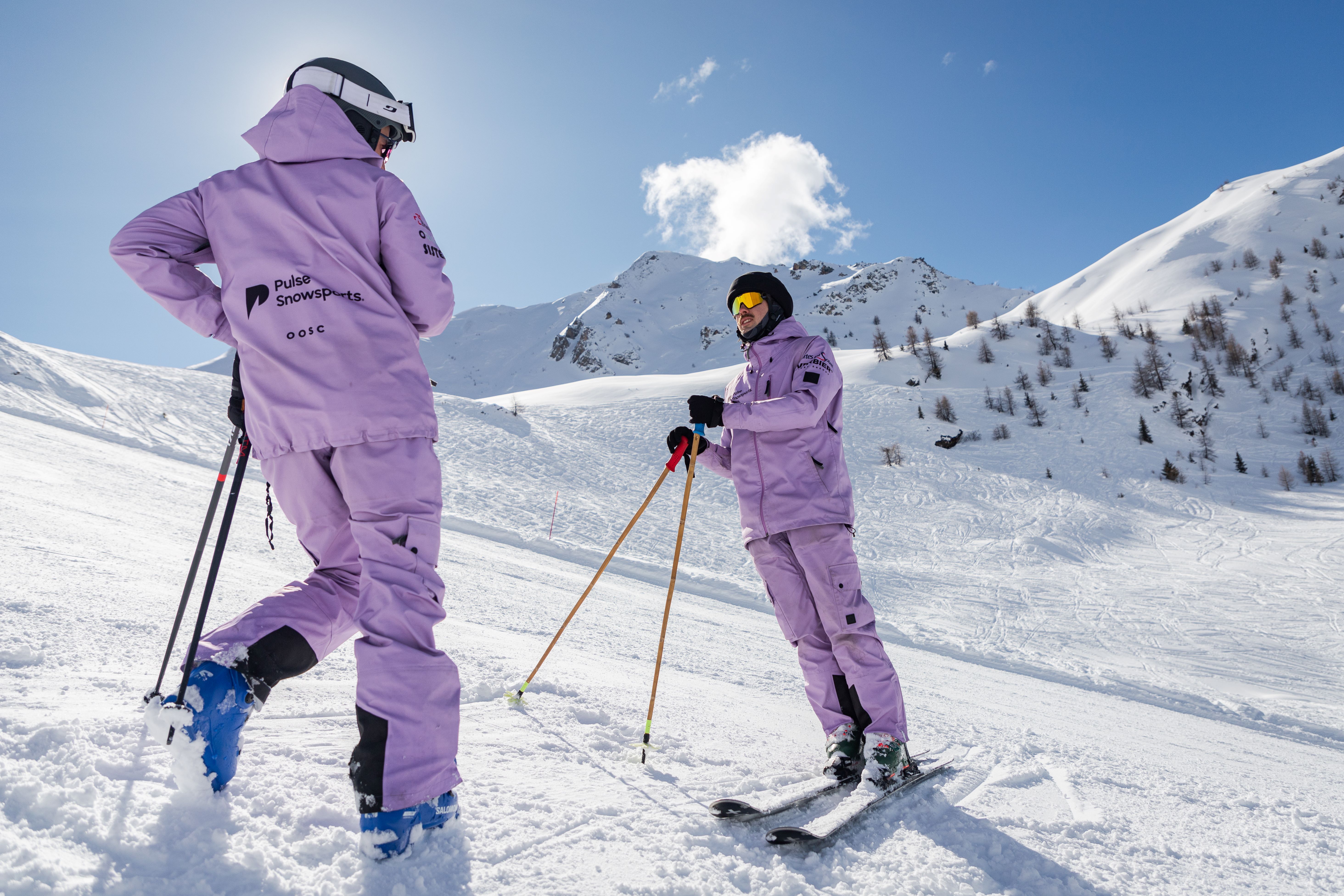
One of the simplest lessons I've learned over the years has very little to do with skiing.
The best instructors don't spend the whole lesson talking. They ask thoughtful questions, listen carefully to their clients and adapt their coaching based on the answers they receive.
Understanding what someone wants to achieve, what they're worried about and how they like to learn is often far more valuable than delivering the perfect technical explanation.
Clients remember how you made them feel long after they've forgotten the exact drills you taught.
Absolutely not.
You don't need to be a former racer, a freestyle champion or an expert skier before starting your instructor journey.
You need a solid foundation, a willingness to learn and a genuine passion for skiing and helping other people enjoy it.
Everything else can be developed.
In fact, many of the best instructors I know started exactly where you are now, wondering whether they were good enough to begin.
That's exactly why instructor qualifications exist.
Every experienced instructor started as a beginner, and every Level 4 instructor once stood exactly where you're standing today, wondering whether they were good enough to begin.
If you're prepared to work hard, stay curious and keep learning, you may already have the most important qualities needed to build a successful career as a ski instructor.
The good news? If you have the right attitude, the rest can be learned. Let's look at how the BASI pathway helps turn passionate skiers into professional instructors.
Every BASI qualification has a purpose. Each level builds on the one before it, introducing new technical standards, teaching skills and professional responsibilities.
The pathway isn't designed to be completed as quickly as possible, it's designed to develop confident, knowledgeable and professional ski instructors over time.
Every Level 4 instructor once started exactly where you are today. Each qualification is simply the next step in the journey.
BASI Level 1 is where your journey begins. The goal isn't to create expert skiers, it's to introduce you to the fundamentals of teaching and give you the skills to safely coach beginner and lower-intermediate skiers in controlled environments.
More importantly, it introduces you to thinking like an instructor rather than simply someone who enjoys skiing.
For most candidates, the biggest challenge isn't the skiing.
It's going from having very little understanding of ski teaching to suddenly learning movement analysis, lesson planning, the BASI teaching philosophy and the TIED framework, all while continuing to improve your own skiing.
There's a lot to learn over four days, but remember, you're not expected to know everything before you arrive. The course is designed to teach, coach and develop you.
Many people assume Level 1 is easy because it's the first qualification. It isn't.
BASI is looking for controlled, balanced and safe skiing, not skiing fast or aggressively.
Another common misconception is that BASI Trainers are only there to assess you. In reality, they're coaching you throughout the course, helping you improve every single day.
You'll usually be ready if you can:
Don't arrive hoping the four-day course will teach you everything.
Seek coaching beforehand, understand the assessment criteria and make sure your equipment is appropriate and properly fitted.
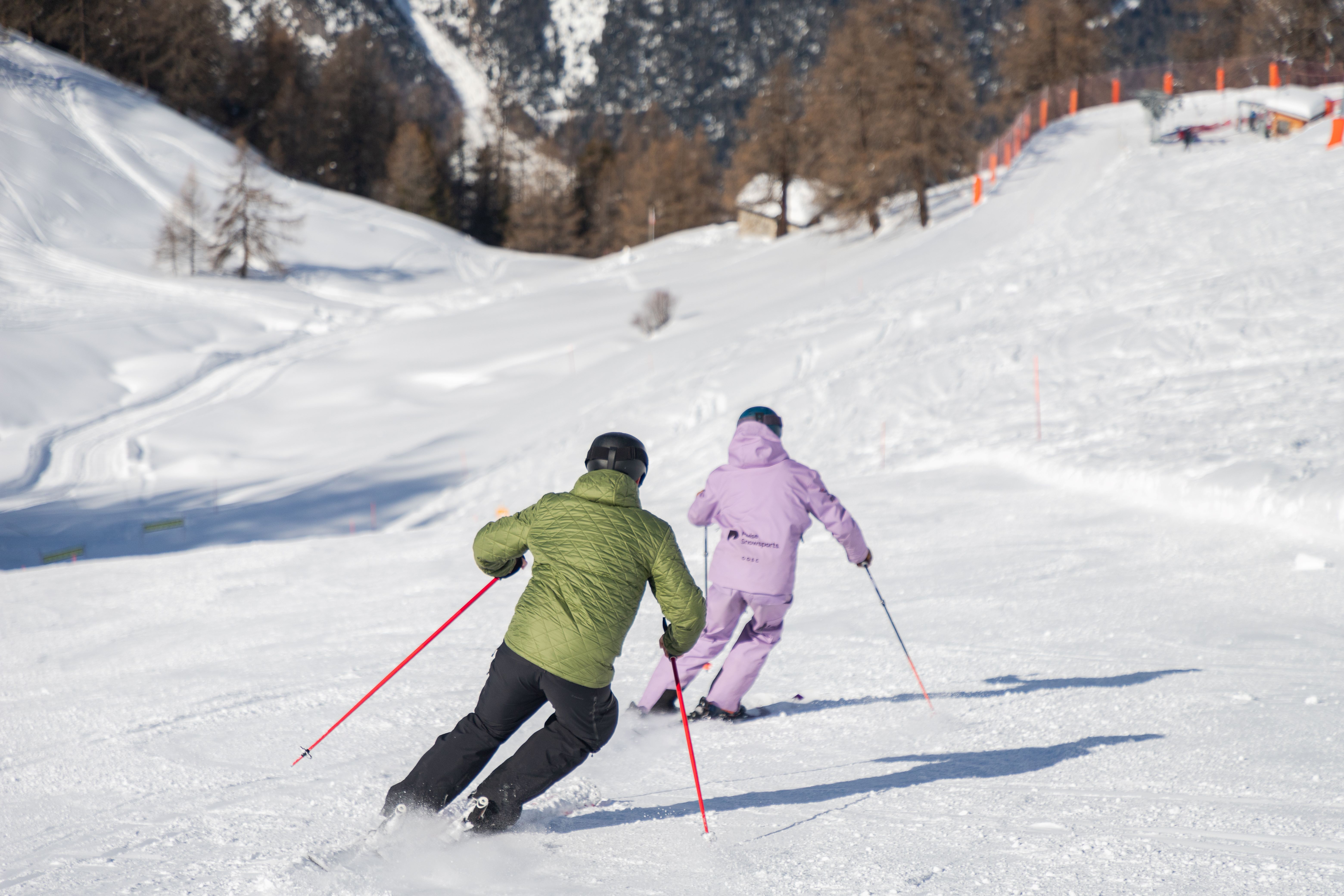
This qualification significantly increases your employability and prepares you to teach a much wider range of clients in professional ski schools around the world.
Level 2 introduces more demanding technical skiing, varied terrain, bumps, steeper slopes and much deeper expectations around teaching and movement analysis.
Many candidates discover that balancing the technical and teaching assessments is more challenging than they expected.
People often assume the skiing is the difficult part and the teaching assessment is straightforward.
In reality, they're equally demanding.
A technically strong skier who struggles to communicate effectively is just as likely to fall short as someone whose skiing isn't yet at the required level.
Once again, remember that BASI Trainers aren't just assessing you, they're actively coaching and helping you improve throughout the course.
Candidates are generally ready when they can:
Don't book your Level 2 assessment just because you've passed Level 1.
Book it when you genuinely feel ready.
Arrive knowing the criteria, understand what will be expected by the end of the eight days and make sure your fitness allows you to perform consistently throughout the course.
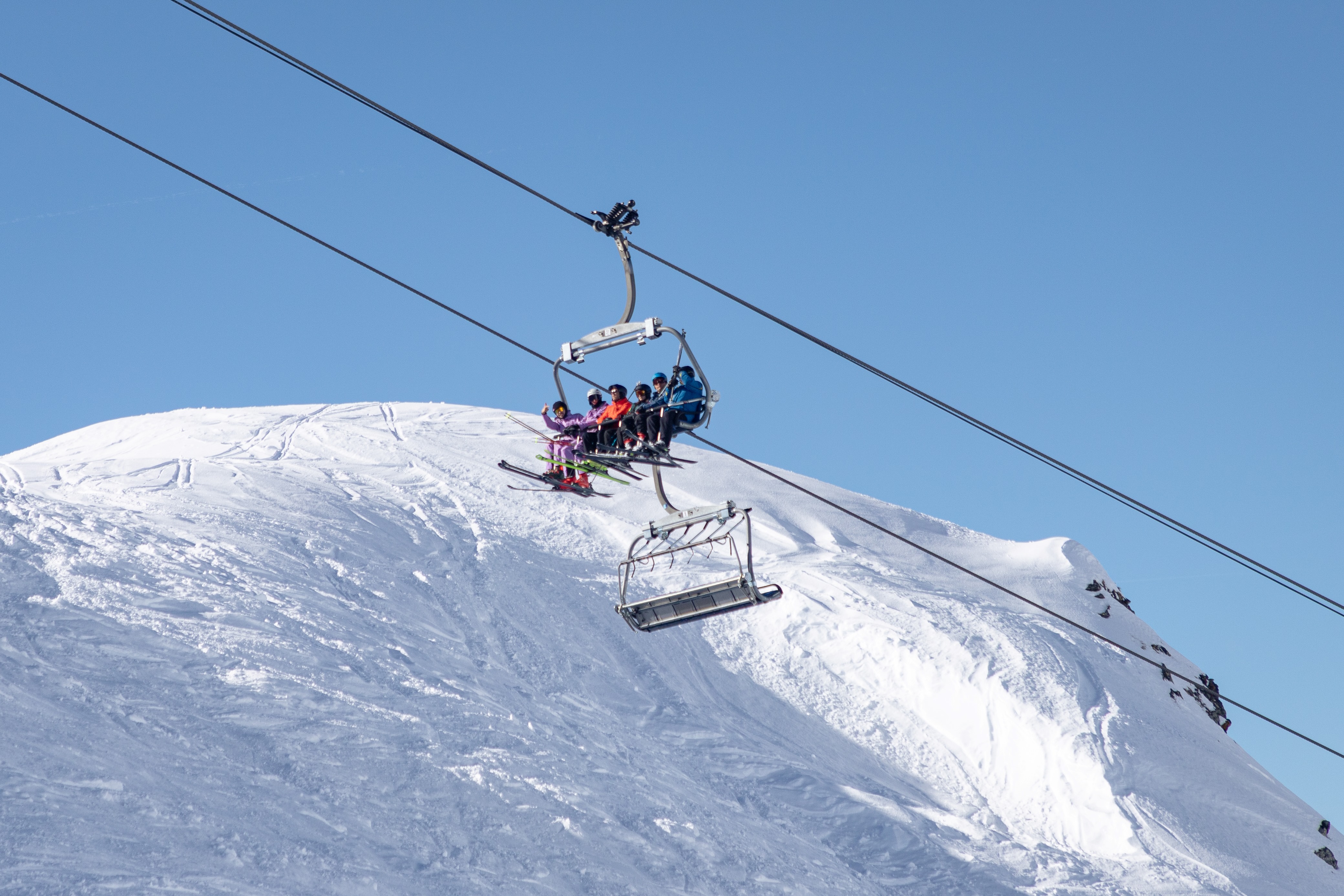
For many instructors, Level 3 is where the journey becomes significantly more demanding.
Rather than simply demonstrating skiing, you're expected to perform skillfully, understand skiing in much greater depth and coach at a far higher level.
This is also the stage where many instructors earn their internationally recognised ISIA Stamp after successfully completing all of the required Level 3 modules.
The jump from Level 2 to Level 3 is considerable.
Candidates move from demonstrating techniques to understanding performance skiing, movement analysis and advanced coaching in much greater depth.
It's no longer one assessment, it's a series of modules requiring sustained commitment over time.
Many people think BASI Level 3 is a single exam.
It isn't.
The ISIA Stamp is awarded only after successfully completing all of the required Level 3 modules and signing off teaching hours.
Instructors who:
Don't rush.
Identify your weaknesses, seek expert coaching and tackle each module when you're genuinely prepared rather than trying to complete everything as quickly as possible.
Learn more about our BASI Level 3 & 4 Training Course
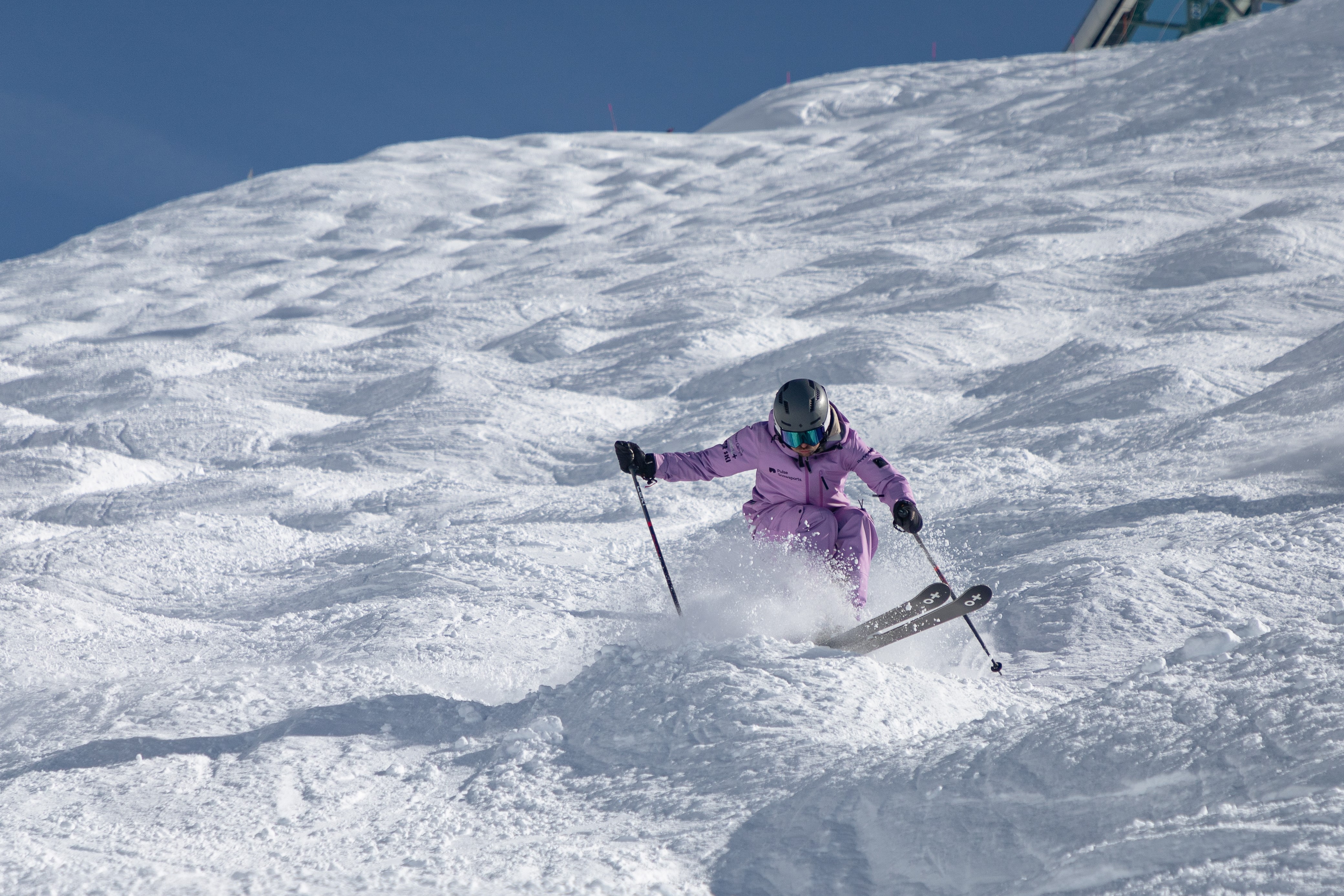
BASI Level 4 represents the highest qualification within the BASI pathway and is recognised internationally as one of the industry's most respected instructor qualifications.
By this stage, you're expected to perform consistently across all terrain, in all snow conditions and with every type of client.
Meeting the criteria consistently.
Success isn't about producing one exceptional run, it's about demonstrating a the highest standard day after day throughout the assessment.
Some candidates believe they'll improve enough during the assessment to reach the required standard.
In reality, you should already be skiing at Level 4 standard before the assessment begins.
Someone who can:
Don't rush from Level 3 to Level 4.
Invest in your skiing, your physical preparation and your consistency. Arrive fit, healthy and ready to perform from the very first run.
Level 4 teaches you that learning never stops. Even at the highest level, the very best instructors remain curious, humble and committed to continual improvement.
Learn more about our BASI Level 3 & 4 Training Course
.jpg)
One of the first questions aspiring instructors ask is:
"How long will it take me to become a ski instructor?"
The answer depends on your skiing ability, previous experience, commitment to training and, perhaps most importantly, how you define success.
If your only goal is to collect qualifications as quickly as possible, it's possible to move through the BASI pathway relatively quickly. But if your goal is to become a confident, employable instructor who clients genuinely want to ski with, the journey takes time.
That's why one of the sayings we use at Pulse Snowsports is:
Slow is pro.
The best instructors don't rush through qualifications, they build experience alongside them.
Explore all our Instructor Courses
Every instructor's journey is different, but for a competent recreational skier, a typical pathway might look something like this.
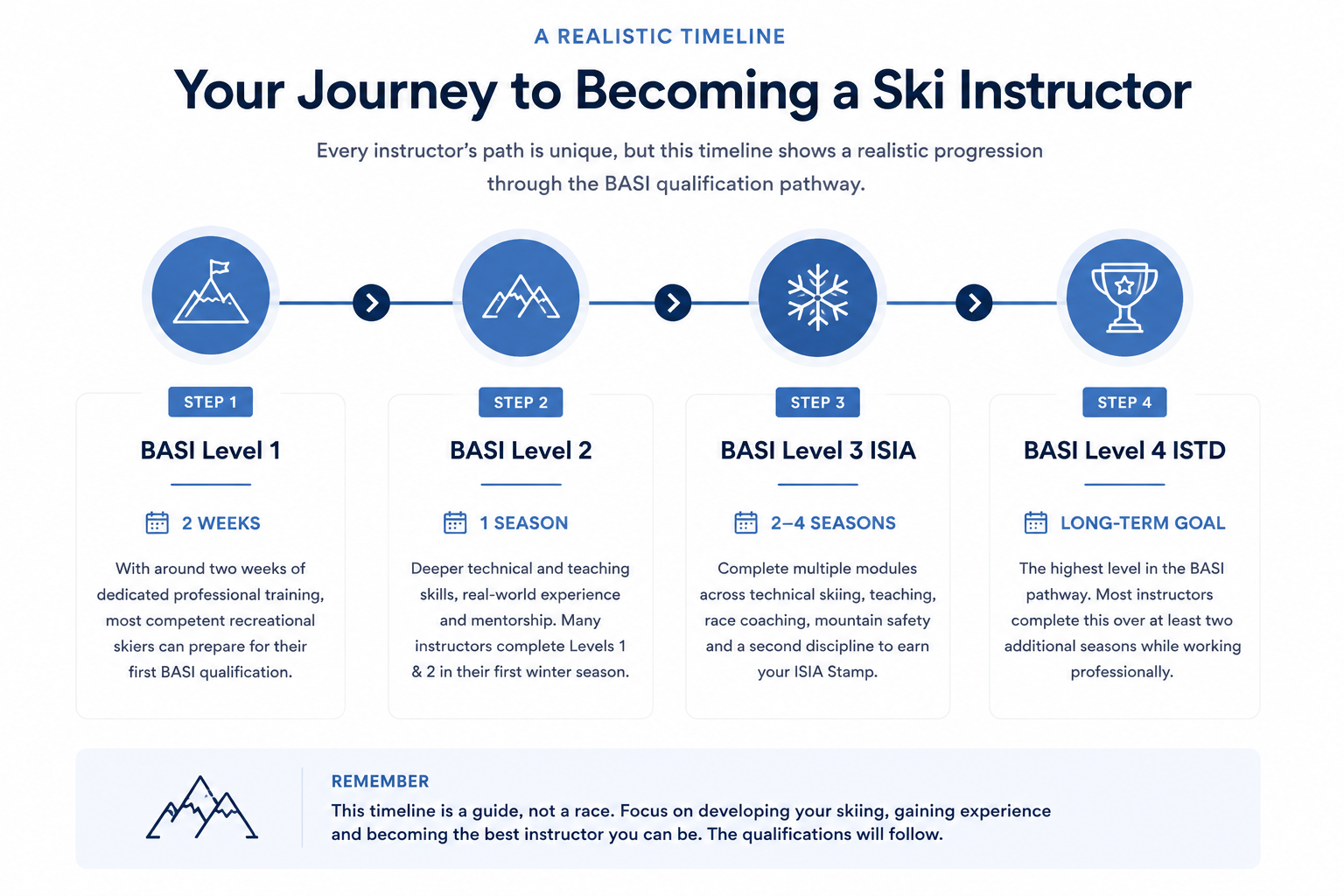
With around two weeks of dedicated professional coaching at the beginning of a season, many competent recreational skiers can realistically prepare for BASI Level 1.
Of course, everyone develops differently, but with structured training, quality coaching and a willingness to learn, this is an achievable first milestone.
Level 2 requires a much deeper understanding of both skiing and teaching.
In my experience, around eight weeks of structured training combined with shadowing, mentoring and real teaching exposure creates an excellent foundation for success.
Many trainees complete both Levels 1 and 2 during a single winter season, although everyone's progress is different.
Outstanding candidates with the appropriate work rights may even begin gaining supervised teaching experience before the end of that season, while many secure their first professional ski school role the following winter.
Level 3 is where every instructor's journey starts to look different.
Rather than one assessment, you'll complete several different modules covering technical skiing, teaching, race coaching, mountain safety and a second discipline before earning the internationally recognised ISIA Stamp.
For most instructors, this takes between two and four additional seasons while continuing to gain valuable teaching experience.
Reaching BASI Level 4 is a long-term commitment.
Although exceptionally strong candidates may complete the modules more quickly, most instructors spread the process across at least two additional seasons while continuing to work professionally.
By this stage you're balancing demanding technical assessments with teaching, mountain safety, international speed tests, written work and language requirements. Success depends just as much on consistency and preparation as raw skiing ability.
Read more about what it's like Inside the Pulse Training Programme
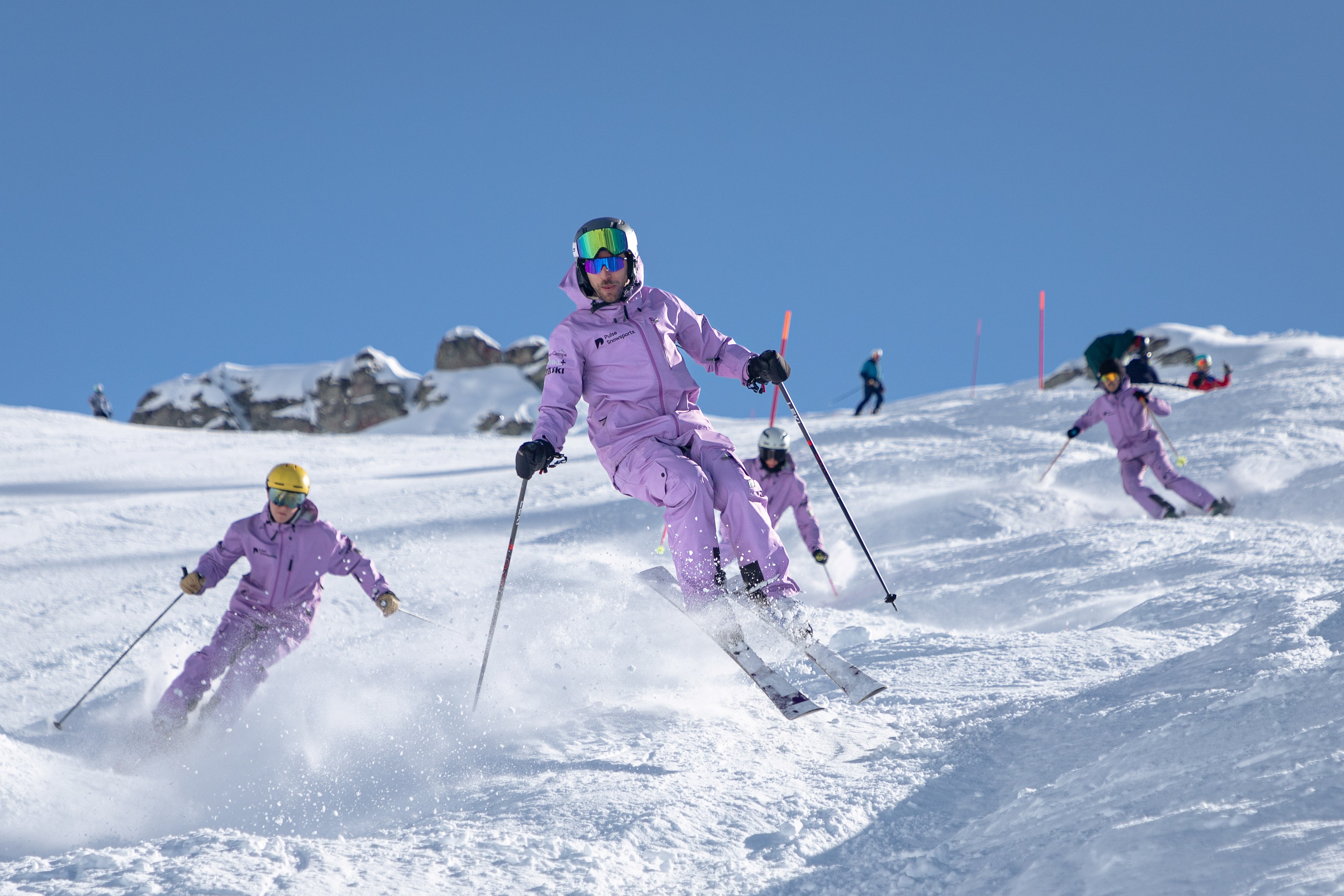
Technically, yes.
I've seen instructors progress from BASI Level 1 to Level 3 in just two seasons.
But many of them spent most of that time training rather than teaching.
They became highly qualified instructors with relatively limited real-world coaching experience.
There's nothing wrong with progressing quickly if it suits your goals, but qualifications alone don't make great instructors.
Looking back at my own journey, I took a different route.
Rather than chasing qualifications as quickly as possible, I prioritised teaching, gaining experience and investing in training over multiple seasons.
I genuinely believe it made me a better instructor.
Every lesson taught me something new.
Every season added another layer of understanding.
Every client helped me become a more adaptable coach.
That's why I encourage aspiring instructors to focus less on collecting badges and more on becoming exceptional at the job itself.
The qualifications will follow.
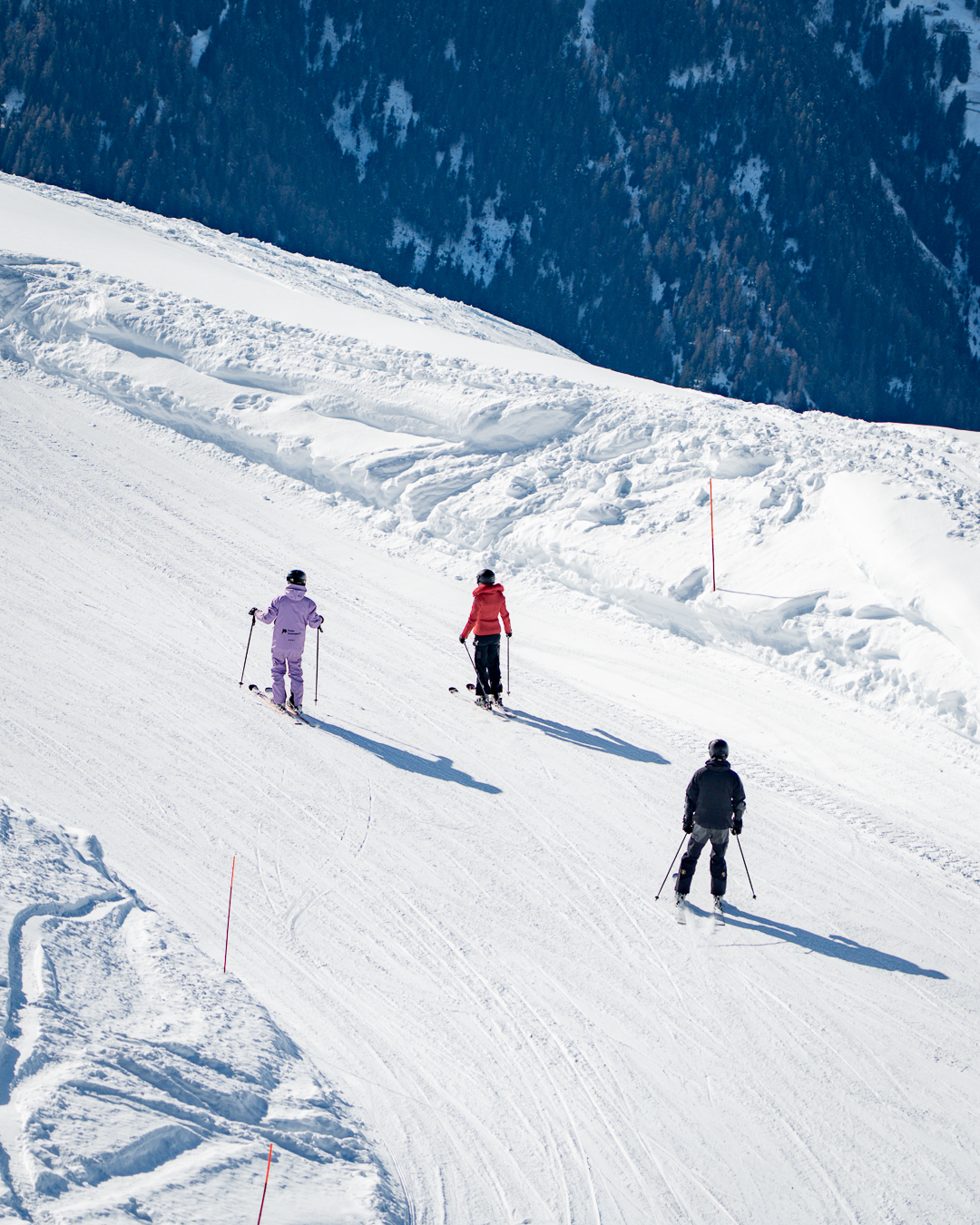
The biggest mistake I see aspiring instructors make is rushing towards BASI Level 4.
Over the years, I've met instructors who dedicated years to chasing the highest qualification, only to realise that they didn't actually enjoy teaching skiing as a long-term career.
I think the opposite approach is far more rewarding.
Take your time. Enjoy the process. Build experience, seek feedback and continue developing your skiing. Focus on becoming the kind of instructor that clients request year after year, rather than simply collecting qualifications as quickly as possible.
When your qualifications are built on genuine experience, they become far more meaningful and you'll almost certainly become a better instructor because of it.
One of the biggest changes isn't technical at all.
It happens when you stop thinking primarily about your own skiing and start thinking about your client's experience.
The moment you begin placing your client's goals, confidence and enjoyment at the centre of every decision, you've stopped thinking like a skier and started thinking like an instructor.
In my experience, that's one of the most important milestones of the entire journey.
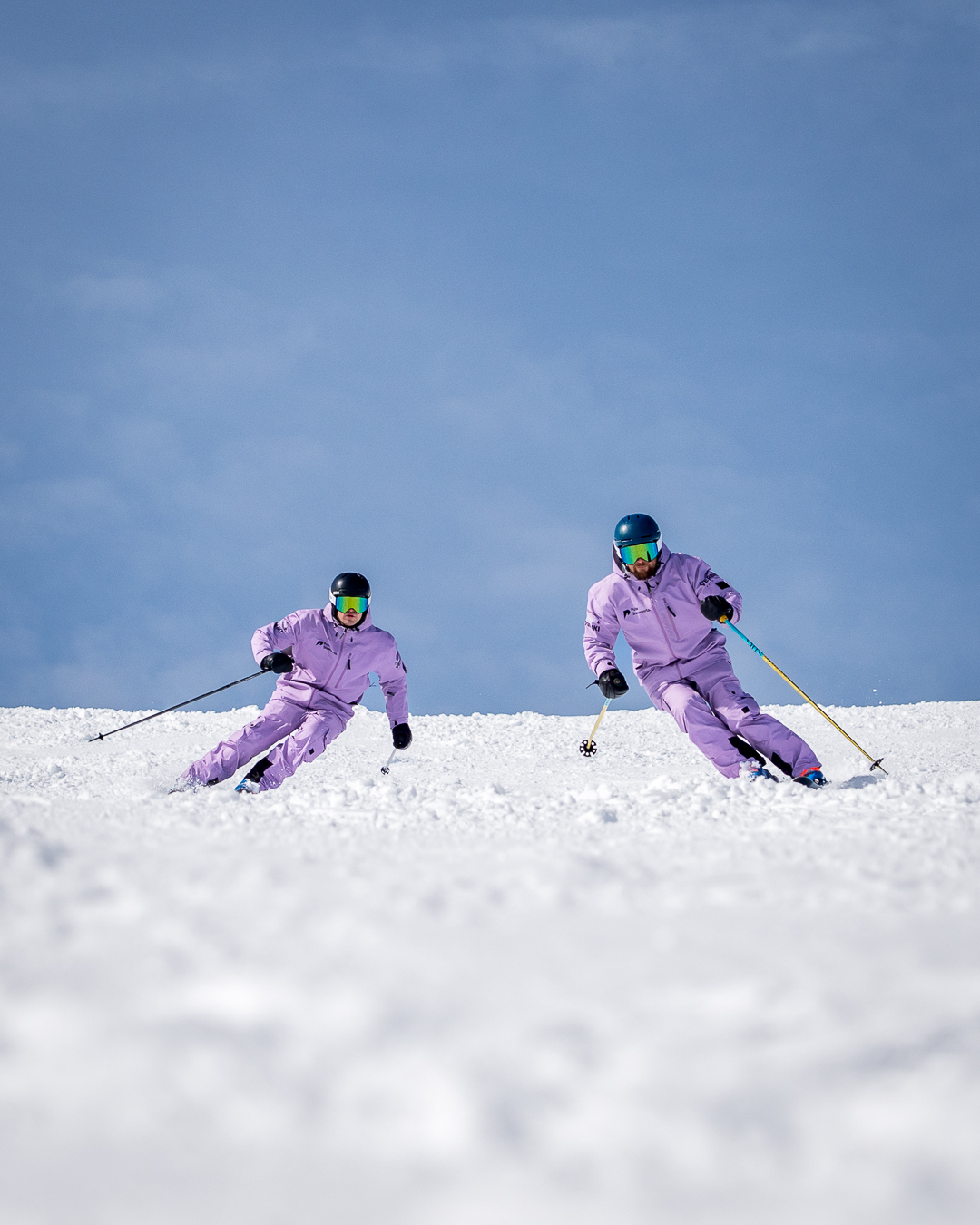
One of the biggest misconceptions about ski instructing is that it's only a seasonal job or a gap year experience.
For some people, that's exactly what it is, and that's perfectly fine.
But for others, it becomes a profession that lasts decades.
I never imagined one winter season would turn into a career, let alone lead to coaching instructors, owning a ski school and helping other people build lives in the mountains.
That's one of the reasons I love this profession.
The opportunities never stop evolving.
Everything is new.
You're learning how to manage your time, communicate professionally and deliver safe, enjoyable lessons for beginner and lower-intermediate skiers.
The biggest lesson isn't technical skiing, it's learning how to make people feel relaxed, confident and excited to learn.
By now, most instructors are comfortable teaching a wide range of clients.
Movement analysis becomes more instinctive, building trust comes naturally, and setting clear goals and expectation from the very start of each lesson is second nature.
One of the most rewarding milestones is welcoming your first returning clients. People begin requesting you specifically because they trust you and enjoy skiing with you.
This is often where instructors really establish themselves.
You can identify technical weaknesses within just a few turns, adapt your coaching instinctively and confidently teach almost every recreational skier who joins your lessons.
Many instructors have built a loyal client base by this stage, with families returning year after year to ski with the same coach.
Experience becomes your greatest strength.
Confident instructors can comfortably teach anyone, from complete beginners to advanced off-piste skiers and aspiring professionals.
Many step into leadership roles, mentoring younger instructors, delivering staff training or managing teams within ski schools.
Others specialise in instructor development, off-piste coaching, race coaching or children's programme.
These are the types of lessons you could be delivering one day:
Learn what happens in an Off-Piste Lesson
Learn what happens in a Private Lesson
Explore our Children's Group Lessons
Adult Group Coaching clinics are always great fun to coach
.jpeg)
Higher qualifications generally lead to greater responsibility, increased earning potential and more opportunities.
But qualifications alone don't build long-term careers.
Trust does.
The longer you work in the industry, the more clients return to ski with you, recommend you to friends and request you season after season.
Some of the most rewarding opportunities I've experienced have come from relationships built over many years.
One thing I've learned over the years is that the ski industry rewards instructors who genuinely go the extra mile.
Clients remember how you made them feel.
Parents remember how safely you looked after their children.
Nervous beginners remember the patience that helped them believe in themselves.
Advanced skiers remember the breakthrough that transformed their skiing.
Those moments build trust.
And trust builds careers.
One of the things I enjoy most about my career today is the variety.
Owning Pulse Snowsports brings new challenges every day. Some mornings are spent planning instructor development, managing the business and supporting our team behind the scenes.
The next day I might be coaching an off-piste lesson, delivering instructor training, teaching freestyle skiing or helping a nervous beginner make their first turns.
That variety keeps the profession fresh, even after more than a decade in the industry.
It's important to be honest.
Ski instructing isn't an easy career.
Winter seasons are intense. During busy periods you'll often work long days for weeks at a time with very few days off.
Looking after your body becomes essential, and staying healthy and injury-free requires consistent training and preparation.
Personally, one of the hardest parts has always been spending time away from family in the UK. Fortunately, they're able to visit regularly, but it's one of the sacrifices that comes with building a life abroad.
Like any career, ski instructing has its challenges.
For me, the rewards have always outweighed them.
If I were hiring instructors tomorrow, I'd look for personality before perfection.
I'd choose someone with energy, patience, professionalism and a genuine enthusiasm for helping people over someone who simply skis beautifully, if you've got both even better.
Technical skiing can always improve.
Character is much harder to teach.
People don't usually return because you taught the perfect drill.
They return because they felt understood.
They return because they achieved something they didn't think was possible.
They return because they trusted you.
For many families, seeing the same instructor each winter feels less like booking another lesson and more like catching up with an old friend.
Parents know their children are safe.
Adults know they'll continue progressing.
The stress disappears because they know everything is in capable hands.
That's when you've stopped simply teaching skiing and started building a career.
Because in the end, the most successful ski instructors don't just create better skiers.
They create experiences people want to return to every winter.
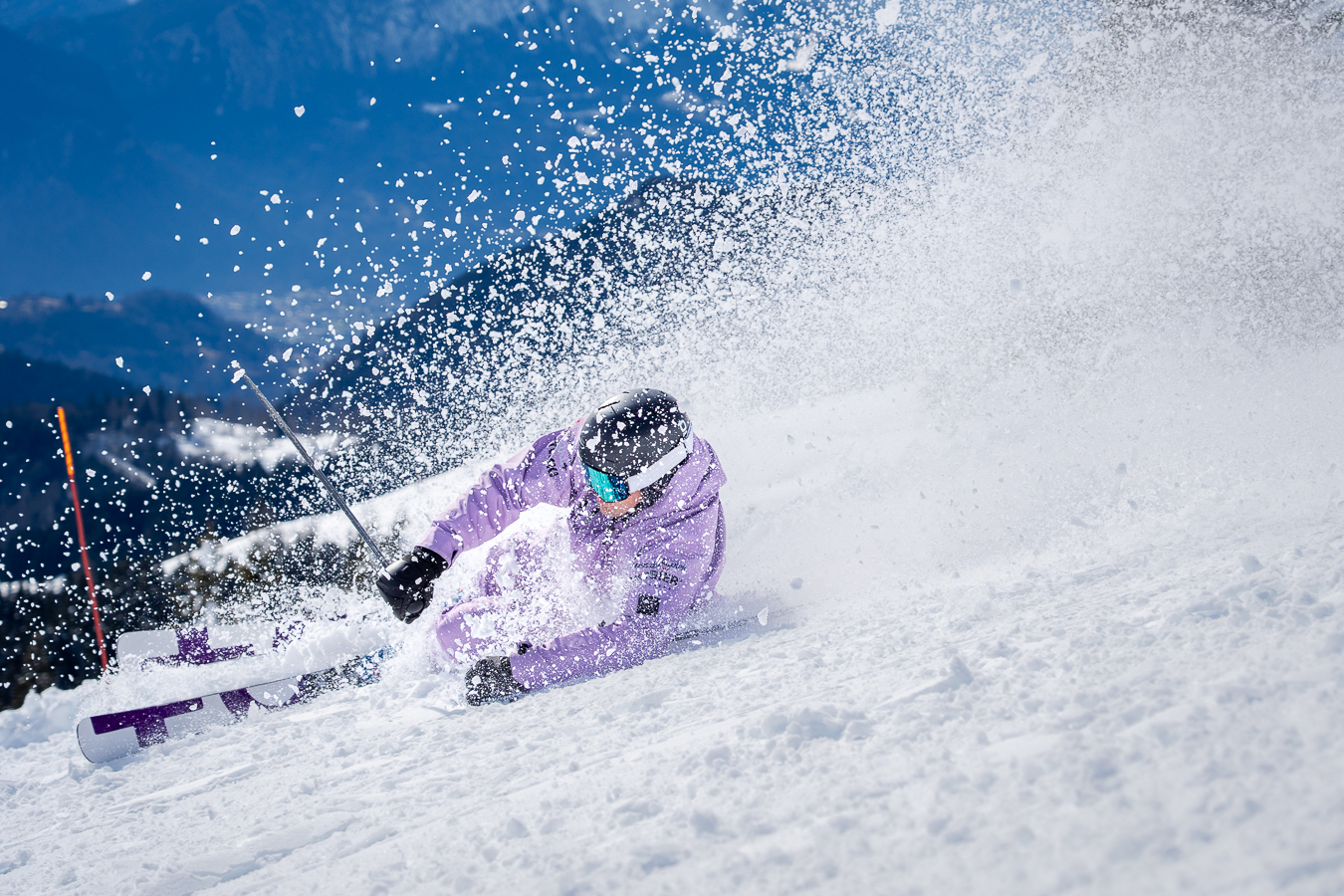
One of the greatest things about becoming a ski instructor is that your career doesn't have to be limited to one country.
Over the years, skiing has taken me from the UK to Switzerland, France, Austria, Italy and New Zealand. Between us, the Pulse Snowsports coaching team has also worked in Canada, Japan and the United States.
Every destination has its own character, culture and style of skiing, and one of the joys of this profession is discovering which mountains feel most like home.
Whether you dream of coaching in the Alps, chasing powder in Japan or building a year-round career by following winter between hemispheres, opportunities exist all over the world.
If someone asked me where I'd recommend starting a professional ski instructing career, my answer would almost always be Verbier.
I'm undoubtedly biased, it's been my home for more than ten years, but I genuinely believe it's one of the best places in the world to develop as a ski instructor.
The terrain is incredibly varied, allowing you to coach everyone from complete beginners to advanced off-piste skiers within the same resort. The international community is welcoming, the skiing is world-class and there are endless opportunities to continue developing your own skiing.
For instructor trainees, Verbier also offers something that's difficult to replicate elsewhere: exposure to an enormous variety of lesson types. Depending on local regulations and work rights, instructors may gain experience teaching private lessons, children's lessons, adult groups and instructor training, helping them become exceptionally well-rounded professionals.
Switzerland is competitive, and the cost of living is higher than many other countries, but the quality of skiing, professional standards and long-term career opportunities make it one of the most rewarding places to build a career.
Canada is a fantastic destination for instructors looking for breathtaking scenery, friendly mountain communities and large, well-organised resorts.
It's particularly popular with instructors beginning their international careers. Winters are colder than the Alps, but the snow quality, welcoming culture and spectacular landscapes make Canada an unforgettable place to spend a season.
Japan has become one of the world's most sought-after destinations for ski instructors, particularly those who love deep powder skiing.
The culture is unlike anywhere else, the hospitality is exceptional and there's something special about finishing a powder day with a bowl of ramen before heading back out for night skiing.
Some Japanese resorts offer gentler terrain than many Alpine destinations, but for powder enthusiasts it's difficult to find anywhere better.
New Zealand offers something completely different.
Its smaller ski fields, relaxed atmosphere and Southern Hemisphere winter make it a popular destination for instructors looking to continue teaching during the European summer.
Although the infrastructure is generally more modest than many European resorts, the scenery, welcoming communities and unique lifestyle make New Zealand an important part of many instructors' careers.
France is home to some of the largest interconnected ski areas in the world and offers fantastic opportunities for ski instructors.
The vast terrain, vibrant resort atmosphere and generally lower living costs compared with Switzerland make it an attractive option for many professionals.
As with every country, it's important to understand local regulations, qualification recognition and employment requirements before applying for work.
Austria combines beautiful mountains, outstanding lift infrastructure and a rich alpine culture.
Many instructors are drawn to Austria for its traditional mountain villages, welcoming atmosphere and varied terrain, making it another excellent destination for building experience within Europe.
The United States offers an enormous variety of skiing, from world-famous resorts in Colorado to destinations across Utah, California and beyond.
The scale of the resorts, strong customer service culture and diverse range of opportunities make it an exciting option for instructors looking to broaden their international experience.
The list goes on...
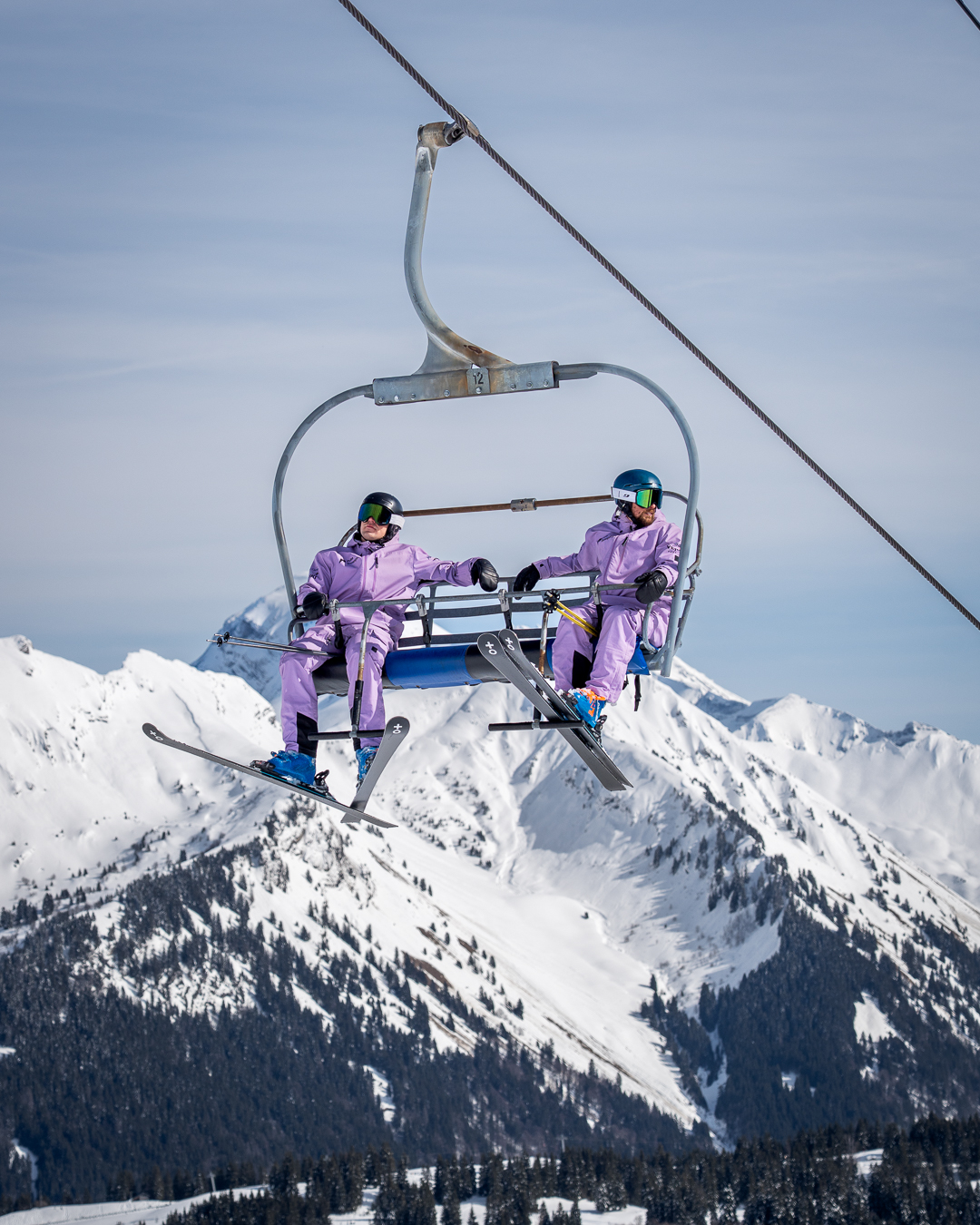
This is probably the question I'm asked more than any other.
Switzerland is one of the most desirable places in the world to work as a ski instructor thanks to its incredible mountains, high professional standards and strong demand for quality coaching.
Higher qualifications and greater experience generally improve employability and earning potential, while returning clients and a strong professional reputation become increasingly valuable as your career develops.
For instructors with the appropriate work rights, Switzerland offers outstanding long-term career opportunities.
For those who don't currently have the right to work in Switzerland, there are still routes into the industry. At Pulse Snowsports, for example, we support eligible instructor trainees through our training programmes, including guidance on student visa applications where appropriate.
One of the most exciting aspects of becoming a ski instructor is that your career doesn't have to stop at one resort or even one country.
Many instructors spend winters in Europe before following the snow to New Zealand, Australia or South America, allowing them to ski, teach and continue developing almost year-round.
You may begin your journey dreaming about a single winter abroad.
But if you embrace the opportunities this profession offers, there's every chance that one season could become a career that takes you around the world.
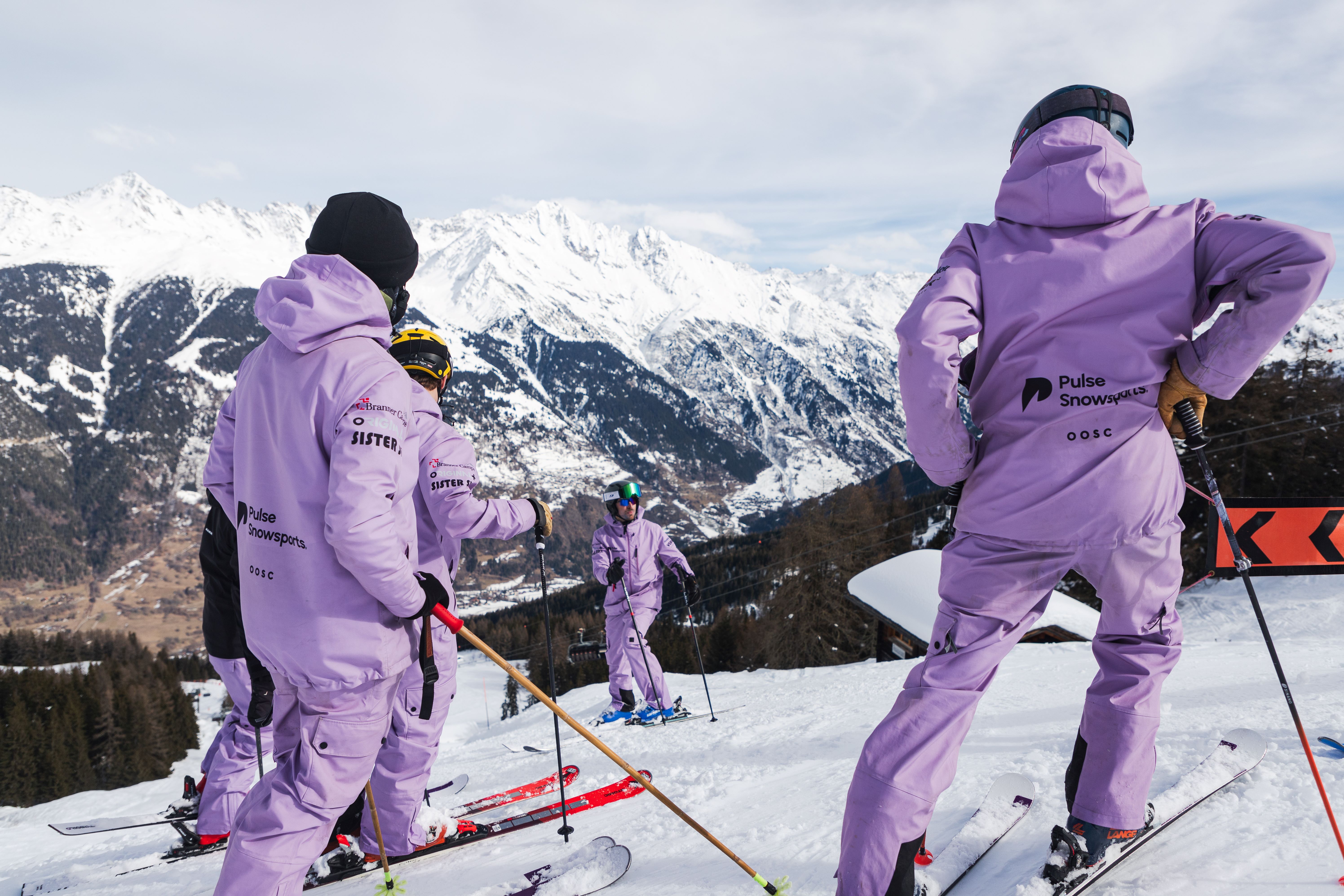
While my own journey into the ski industry started later in life, Sam's began much earlier.
At just 16 years old, he completed his BASI Level 1 qualification, driven by one simple goal, to spend as much time on skis as possible. Shortly afterwards he achieved BASI Level 2, opening the door to teaching professionally and giving him an early glimpse of what would become a lifelong career.
Like many aspiring instructors, Sam worked tirelessly to make that dream a reality. During the winters he travelled across Europe teaching skiing wherever opportunities arose, while the summers were spent working as a lifeguard and even sweeping floors in a local garage to save enough money for the next season in the mountains.
Eventually, he made the move to Verbier to continue his development and work towards BASI Level 3 ISIA. Surrounded by exceptional terrain, experienced coaches and one of the world's leading ski destinations, his passion for skiing and teaching grew even stronger.
Determined to keep improving, Sam began following winter between hemispheres, spending European summers coaching in the Southern Hemisphere and building valuable experience across different snow conditions, cultures and teaching environments.
Years of dedication eventually led him through the BASI Level 4 pathway, becoming a BASI Trainer and mentoring the next generation of ski instructors. Alongside building a loyal private client base, he discovered that helping other instructors achieve their own goals was every bit as rewarding as coaching clients on snow.
Today, Sam brings that same passion for technical excellence, mentorship and instructor development to Pulse Snowsports.
Together, we built the ski school we'd always talked about creating, one founded on exceptional coaching, honest communication and helping instructors build long-term careers, not simply pass qualifications.
Discover why BASI Trainers matter
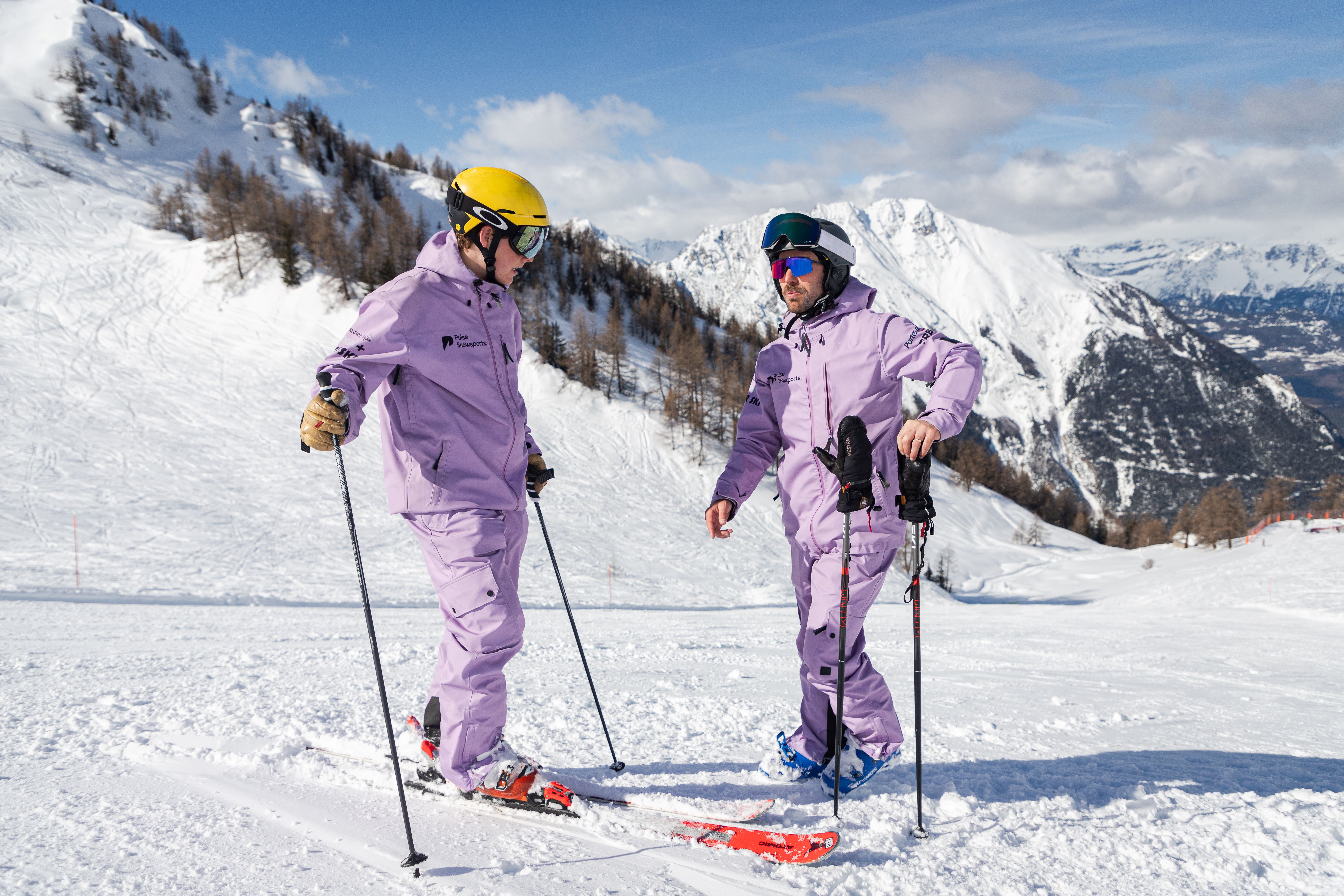
People often ask why we decided to start our own ski school.
The answer is actually very simple.
We wanted to create the ski school we'd always dreamed of working for.
Between us, the Pulse Snowsports leadership team has spent decades working in the ski industry. We've worked for outstanding ski schools, learned from exceptional mentors and coached thousands of clients across Europe and beyond.
Along the way, we also saw things we believed could be done differently.
We wanted to create an environment where instructors felt genuinely supported rather than simply managed.
A place where open and honest communication wasn't just encouraged but expected.
A ski school where professional development wasn't something that happened once a season, but became part of everyday life.
Most importantly, we wanted to build a culture where instructors were encouraged to become the very best versions of themselves.
Because better coaching create better ski instructors, better instructors create better experiences for clients.
That belief sits at the heart of everything we do.
Instructor qualifications are incredibly important.
They provide structure, consistency and internationally recognised standards.
But qualifications alone don't make exceptional ski instructors.
Experience does.
Mentorship does.
Constructive feedback does.
Teaching hundreds of different clients does.
Learning from mistakes does.
That's why our programmes focus on developing complete professionals rather than simply preparing candidates to pass assessments.
If someone leaves Pulse having gained a qualification but lacking confidence, we've fallen short.
If they leave ready to walk into any ski school, teach with confidence and continue developing throughout their career, then we've done our job.
One of the biggest challenges in my own journey wasn't the skiing.
It was not knowing what I didn't know.
I didn't understand the qualification pathway.
I didn't know how ski schools recruited.
I didn't know what opportunities existed.
I made plenty of mistakes simply because I didn't have anyone guiding me through the process.
That experience has shaped the way we coach today.
We believe every aspiring instructor deserves honest advice, experienced mentors and people who genuinely care about their long-term success.
Sometimes that means helping someone prepare for an assessment.
Sometimes it means telling them they're not quite ready yet.
Sometimes it simply means listening.
Our goal has never been to produce the highest number of qualified instructors.
Our goal is to help people build careers they'll still love ten years from now.
That means encouraging curiosity.
Promoting continual learning.
Creating opportunities to gain real teaching experience.
Supporting instructors through challenges.
Celebrating their successes long after they've left our programmes.
Watching former trainees secure jobs in Switzerland, New Zealand, Canada and beyond is every bit as rewarding as seeing them pass an assessment.
Because qualifications are only the beginning.
The career that follows is what really matters.
Every decision we make at Pulse comes back to one simple question:
Would this create a better instructor and a better experience for the client?
If the answer is yes, we pursue it.
If the answer is no, we don't.
That philosophy influences everything we do, from instructor training and professional development to the way we communicate with clients and support our team.
We're incredibly proud of the qualifications our instructors hold.
But we're even prouder of the people they've become.
Because at the end of the day, great ski schools aren't built on qualifications alone.
They're built on trust.
They're built on mentorship.
They're built on professionalism.
And above all, they're built by people who genuinely care about helping others succeed.
That's the ski school we set out to create.
And every season, we're still working to make it even better.
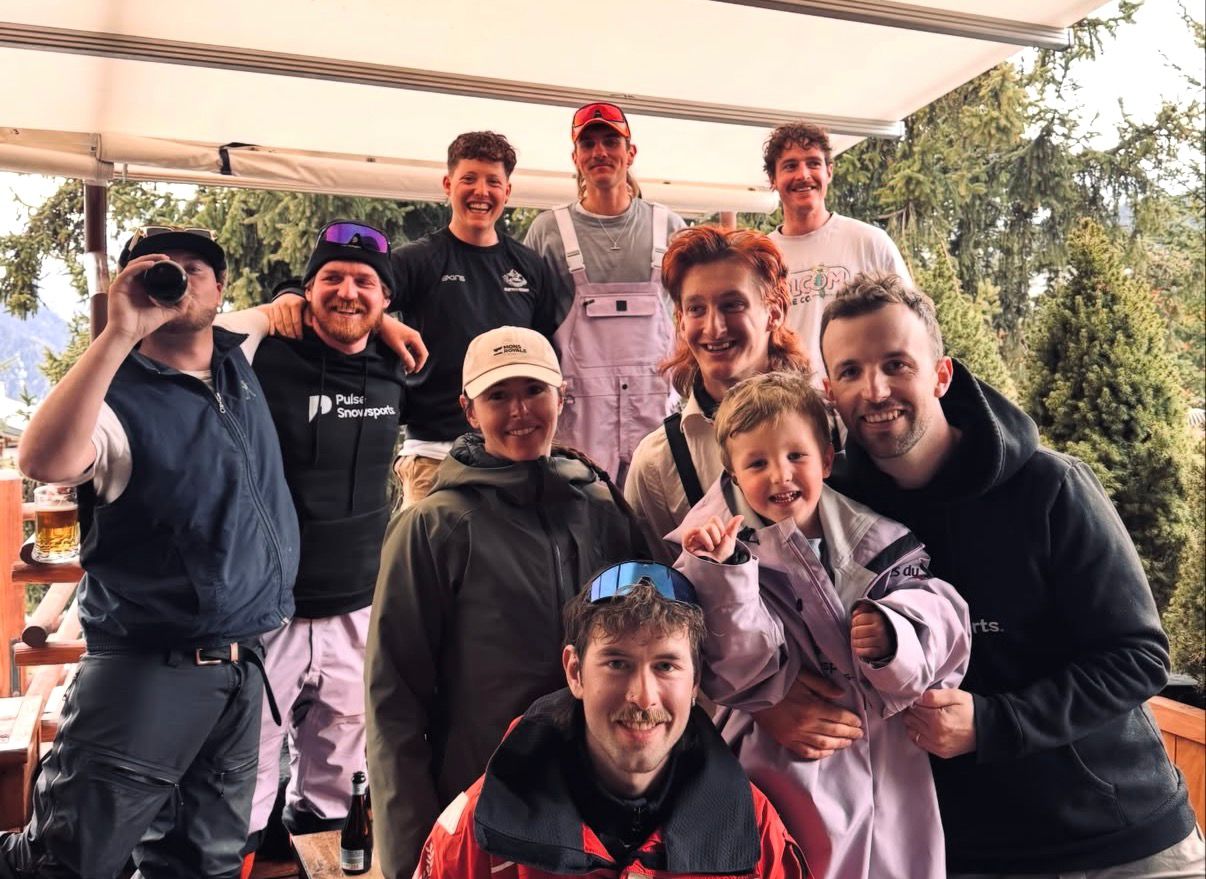
People often ask me what the most rewarding moment of my career has been.
Most expect me to talk about passing BASI Level 4, skiing incredible mountains around the world or launching Pulse Snowsports.
The truth is, it wasn't any of those.
It came at the end of my first season coaching instructor trainees.
One of the candidates I'd worked with throughout the winter was preparing for his BASI Level 3 ISIA Technical assessment. He reminded me a lot of myself when I first started. He loved skiing, worked incredibly hard and simply wanted to build a life in the mountains.
The challenge was that he didn't have the right to work in Switzerland long term. Passing Level 3 and earning his ISIA Stamp would give him a much stronger chance of securing work in New Zealand for the Southern Hemisphere season.
We spent the entire winter training together.
There were great days, frustrating days and moments when he questioned whether he was good enough. Like every instructor on the pathway, he had setbacks, but he never stopped turning up. He listened, reflected, trusted the process and kept putting in the work.
When he passed his final technical assessment, I couldn't have been prouder.
Afterwards, I wrote a reference to support his application to a ski school in New Zealand.
A few weeks later, he got the job.
Today, he's living the life he set out to build, working as a ski instructor in New Zealand, continuing to develop his skiing and doing what he loves every day.
Watching that happen meant more to me than passing any qualification myself.
It reminded me why we created Pulse Snowsports in the first place.
Our goal is to help people build careers they genuinely love.
If someone reads this guide, takes their first step into the industry and, a few years from now, finds themselves living their own dream in the mountains, then we've achieved exactly what we set out to do.
This trainee definitely won't be the last.
Every winter, we hope to help more aspiring instructors discover what this profession can offer, build careers they never imagined possible and, one day, inspire the next generation in exactly the same way.
Still have questions? Here are some of the most common questions we're asked by aspiring ski instructors. If you can't find the answer you're looking for, our team is always happy to help.
No. One of the biggest misconceptions is that you need to be an elite skier before starting. In reality, you need a solid foundation, a willingness to learn and a genuine passion for helping others. Your skiing will continue to develop throughout your instructor training and professional career.
Most UK instructors begin with BASI Level 1, progress to BASI Level 2, and continue towards BASI Level 3 ISIA and BASI Level 4 ISTD as they gain experience. Each qualification develops your technical skiing, teaching skills and professional understanding.
Many trainees complete BASI Level 1 and Level 2 during a single winter season. Becoming an experienced professional instructor is a much longer journey that typically takes several seasons of teaching, training and continual development.
Yes. Many people achieve their first instructor qualifications during a single winter. Building a long-term career, however, takes experience, mentoring and continued professional development beyond the initial qualifications.
Not at all. Every season we meet people changing careers in their 30s, 40s and beyond. Your attitude, enthusiasm and willingness to learn matter far more than your age.
Absolutely. Many instructors enjoy careers spanning decades, progressing into trainer, examiner, ski school management, private coaching or even owning their own ski school. Others follow winter between the Northern and Southern Hemispheres, allowing them to teach almost year-round.
BASI qualifications are internationally respected and have helped instructors build careers across Europe and further afield. Employment opportunities depend on local regulations, qualification recognition and your right to work in each country.
The qualifications are challenging because they assess both skiing and teaching. With structured coaching, good mentoring and consistent practice, they're achievable for motivated candidates who are prepared to put in the work.
Both matter, but the instructors clients remember are those who genuinely connect with people. Technical skiing can always improve, whereas empathy, communication and professionalism are what build lasting careers.
If your goal is to become a professional ski instructor, a structured Gap Course can provide coaching, mentoring, shadowing opportunities and real teaching experience that are difficult to gain independently.
Don't rush through qualifications.
Invest in coaching.
Ask questions.
Seek mentors.
Focus on becoming the best instructor you can be rather than simply collecting qualifications.
The qualifications will follow naturally.
At Pulse Snowsports, our focus extends far beyond helping trainees pass assessments. We provide structured coaching, real mentorship and practical teaching experience designed to prepare aspiring instructors for long-term careers in the ski industry.
Visit our Ski Instructor FAQ Hub for detailed answers covering BASI qualifications, instructor training, Gap Courses, career pathways, working abroad and much more.
Every ski instructor starts in exactly the same place, with a love of skiing and the decision to take the first step.
Whether you're dreaming of one unforgettable winter or building a lifelong career in the mountains, the right guidance, coaching and mentorship can make all the difference.
At Pulse Snowsports, our instructor programmes are designed to help aspiring instructors develop far more than just the technical skills needed to pass an assessment. Through structured coaching, personalised feedback, real teaching opportunities and season-long mentorship, we'll help you build the confidence, experience and professionalism needed for a successful career in the ski industry.
If you're considering becoming a ski instructor, we'd love to help.
Explore our BASI Level 1 & 2 Gap Course, discover our Instructor Training Programmes, or simply get in touch for an honest conversation about your goals. Whether you're ready to start this season or you're just beginning to explore your options, we're always happy to offer straightforward advice with no pressure.
Every journey into the mountains starts with a single decision.
Hopefully, this guide has helped you take the first step.
Explore Our BASI Level 1 & 2 Gap Course
Explore ISIA Level 3 & 4 Training
Continue exploring the BASI qualification pathway:
Explore more ski advice, resort guides, instructor training articles and mountain stories from the Pulse Snowsports team.
Book your lesson online, or speak directly with our team for help with availability, lesson options or choosing the right coaching for you.

We use cookies to improve your experience and measure website performance. You can accept cookies or continue with essential cookies only. For more information see our Privacy Policy.